
Beyond Borders and Battlefields
Retiring War as a Tool of History

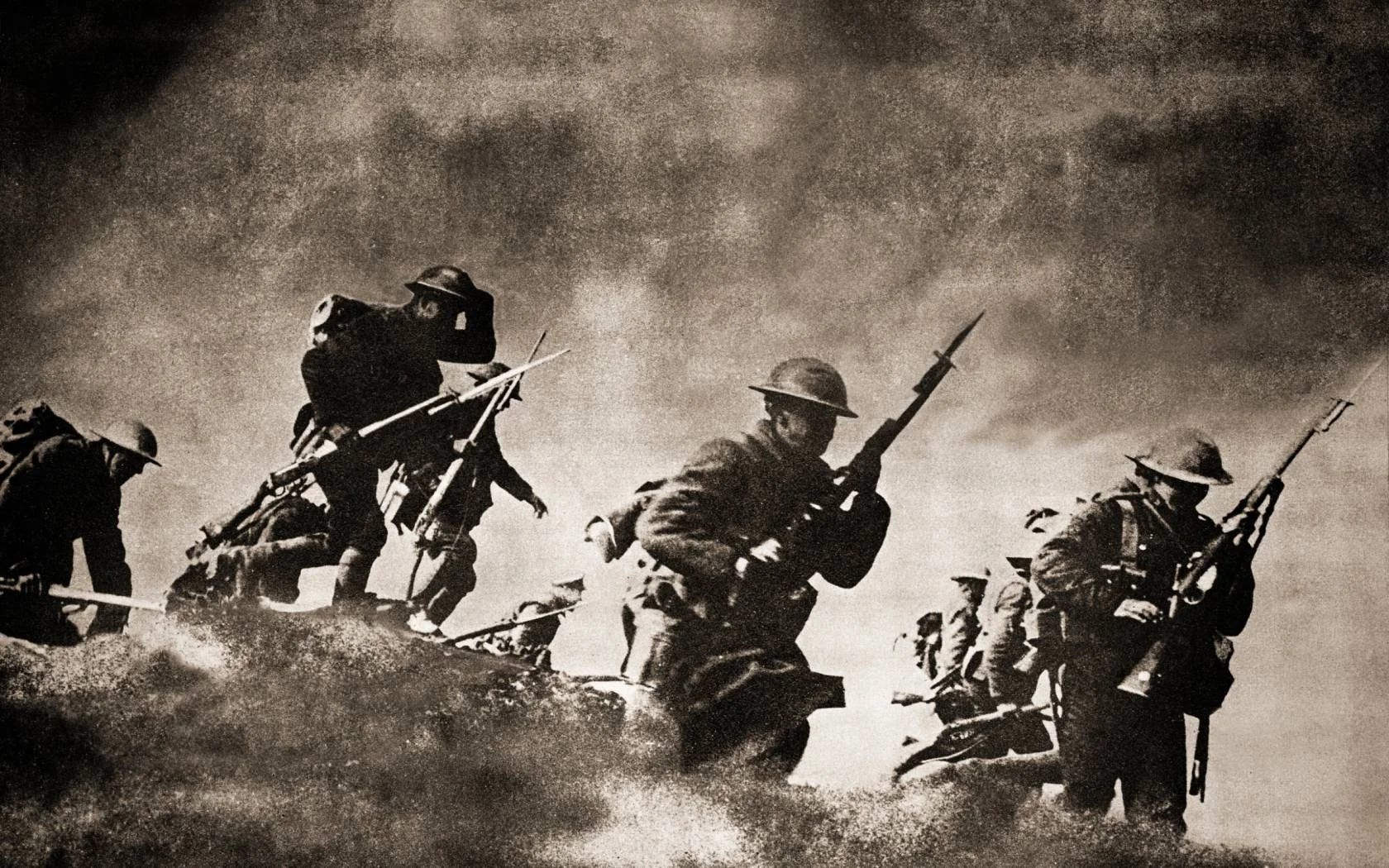
Wars keep happening not because they work, but because they are woven into how our civilisation understands power, security, identity and even meaning. They are the reflex of a deeper operating system that is itself increasingly at war with the future.
The surface story is familiar: conflicts over land, ideology, religion, resources, status. Borders shift, regimes fall, alliances reconfigure. From a distance, history can appear as a procession of wars punctuating otherwise “normal” times. But when you stand inside the present – a planetary civilisation in ecological overshoot, saturated with weapons, interconnected by digital platforms, and riven by structural inequalities – war looks less like an exception and more like a repetitive script that no longer knows how to end. Lines on maps alter. Trauma deepens. Little changes where it matters most – in the soul of our species.
The puzzle is not just why we fight. It is why, despite the manifest failure of war to resolve the crises it claims to address, it remains one of the primary tools to which incumbent leaders, movements and even ordinary citizens revert when the system is under such strain.
To answer that, we need to track how a grand worldview hardens into a world-system, how that system trains our mindsets, and why war keeps recurring at their intersection.
The Operating Code: Security as Domination
Beneath every institution lies a story. Today’s dominant story, whether expressed in nationalist, religious, technocratic or ideological terms, tends to share a small cluster of assumptions:
• Security is achieved and maintained by controlling territory, resources and populations.
• Power is essentially zero-sum.
• Growth – of GDP, markets, influence, “strategic depth” – is both desirable and effectively limitless.
• Violence, if applied decisively enough, is an acceptable way to protect or advance all of the above.
These propositions are encoded into the hardware of our world-system: nation states, standing armies, protected borders, central banks, supply chains, security alliances, corporate law. They are normalised through education, media, entertainment and bureaucratic routines. You are not asked whether you agree with them; you are socialised to live as if they are true. As if they have always been true.
Out of this hardware emerge familiar operating habits – in governments, corporations, communities and individuals: distrust of outsiders, reflexive recourse to coercion, competitive framing of almost every issue, a chronic inability to imagine sufficiency. In such a world, war is not felt as a breakdown. It is simply an available function – a high-cost, high-risk process that can be run when stress reaches a certain level and other scripts have failed or look politically impossible. Crucially, this remains the case even when war’s historical record as a problem-solving device is, at best, mediocre.
Seen from within the code, war does not have to work in any fundamental sense. It only has to be believed to work by those whose status, fear or imagination are captive to that code. In that sense, the written history of the past few thousand years can be read as the history of a few trying to live at the expense of the many – a civilisational drift towards parasitism in which war is the preferred instrument for enforcing that arrangement.
The Illusion of Change
We cling to an idea of war as an engine of decisive change. Revolutions, national liberations, the collapse of empires – all wrapped in stories of cathartic rupture achieved through organised violence. Yet look closely at the aftermath of many contemporary wars and a more prosaic pattern appears. States fracture and reassemble around familiar elites. Economic structures re-align but seldom transform. Extractive industries continue to extract. Old clients are replaced by new patrons. Armed factions rebrand as political parties. Laws are rewritten in the language of reform while the core logic – accumulation, hierarchy, territoriality, dependency – endures.
The whole sad story is one of futility and waste. Maps are updated. Cemeteries expand. But the deep code remains largely untouched.
Part of the reason is straightforward enough: most modern wars are fought “inside” the same civilisational frame. Opponents fly different flags, preach different doctrines, invoke different gods, but rarely question the elementary structures they are fighting to control – the nation state, proprietary markets, territorial sovereignty, growth-dependent economies. They argue over who sits at the table, not over how the table is built or why it even exists.
So war becomes a violent way of rearranging the furniture in an unchanged room. The illusion of change masks a continuity of operating assumptions. That is why those who profit most from the system – financially, politically, psychologically – can afford to keep war in the repertoire. Shocks are absorbed. The underlying architecture is preserved.
War as Ritual
If wars change so little structurally, what exactly are they doing? One answer is that war functions as a ritual through which groups reaffirm who they are. When economies fail to provide a majority of people with dignity or meaning, when social fabrics fray and institutions start to lose legitimacy, militarised identities step in, ostensibly to stabilise, secure and protect what the group cherishes.
War, and the preparation for war, offers clear boundaries between “us” and “them”. It provides a script in which individual suffering is woven into a collective story of sacrifice. It simplifies moral ambiguity: killing becomes duty; obedience becomes virtue. For some this is coerced, for others it is actively sought, especially when everyday life feels empty, humiliating or precarious.
This is universal. Whether one is a conscript in a poor rural district, a drone operator in a distant facility, a member of a guerrilla band, or an activist in an online outrage swarm, the war-frame can supply an intensity of belonging and purpose that consumer culture rarely matches.
It also manages humiliation. Defeat, occupation, colonisation, ethnic cleansing, partition – these experiences leave deep psychic wounds. Absent any credible process of reckoning and restorative justice, those wounds become open sores, cesspits of grievance and bitterness. Political and religious entrepreneurs, on all sides, learn to mine those cesspits. Old injustices are replayed and updated, not to heal them, but to justify new mobilisations.
Memory becomes a weapon. The sacred is harnessed: martyrdom, divine mandate, ancestral duty, honour. The dead are folded into a narrative that demands further sacrifice. In this way, war functions not merely as strategy but as sacrament: a ceremony through which a community periodically proves, to itself, that it still exists and still matters.
As long as courage, honour and transcendence are primarily narrated through martial sacrifice, efforts to move beyond war will meet a cultural wall. You simply cannot de-normalise war without offering alternative ways for societies to experience collective courage, shared risk, initiation and even ecstasy.
The Business of Perpetual Insecurity
Overlaying this ritual layer is a material one. War is not just about beliefs and spilling blood; it is a highly profitable business – in many economies generating more revenue, political leverage and technological spin-offs than activities like human trafficking or prostitution, while remaining far more socially and legally legitimate.
In many societies, the defence and security sectors are not peripheral. They are central columns of the political economy. Arms manufacturers, surveillance firms, private military contractors, logistics operators, reconstruction companies, border-control technology providers – all generate profits, careers and lobbying clout from a steady diet of tension and threat.
Once such complexes are integrated into state budgets, industrial strategies and political patronage networks, systems develop a strong incentive to maintain a “useful” level of insecurity. It need not escalate into open warfare everywhere all the time. Cold conflicts, arms races, proxy skirmishes, securitised borders and militarised policing can be enough to sustain revenue streams and institutional influence.
This does not require a secret cabal pulling strings. It just requires alignment. When influential actors in politics, business, the military and media share a worldview in which danger is permanent and militarised response is legitimate, the system learns to feed itself. Calls for demilitarisation, under such conditions, look naïve or reckless. Add to this the capacity of powerful states to externalise most of the costs of warfare onto distant populations – via drones, long-range strikes, sanctions, proxy forces or cyber operations – and the political threshold for resorting to violence in those states is lowered still further. Destruction becomes an offshore service.
The result is a world-system in which war, or the constant threat of it, is not an aberration but part of the “business climate”.
Shocks Without Transformation
The present epoch is strewn with non-military shocks: pandemics, financial meltdowns, climate extremes, critical infrastructure failures, technological disruption. Each of these stress-tests the operating system. Each could, in principle, open a space for redesign. Sometimes they do elicit remarkable collaboration: cross-border scientific work on vaccines, for example; joint disaster relief; temporary ceasefires to allow humanitarian access; shared fire-fighting and disease surveillance.
For a brief moment, security is reframed as mutual vulnerability and shared resilience. But it rarely persists beyond the next squabble. Old habits die hard. The same shocks can trigger the opposite reflex: blame of outsiders; militarisation of public health; predatory profiteering; border closures and xenophobia; emergency laws that never quite expire.
Why the divergence? Early evidence suggests the direction a crisis takes depends heavily on prior conditions. Where trust in institutions is already corroded, where inequality is entrenched, or where media ecosystems monetise outrage, shocks are easily captured by those whose goals are more control, more surveillance, more militarisation. Where networks of co-operation are already in place – among cities, local communities, professional bodies or indigenous alliances – crises can strengthen those ties and speed up practical experiments in sharing resources, knowledge and responsibility across borders.
In short, crises do not in themselves rewrite the code. They amplify whatever happens to be latent. They can be midwives of a different civilisational worldview, or accelerants of the old one’s more authoritarian tendencies. That ambiguity is precisely where we are stuck. However:
• Cities, increasingly on the front line of climate impacts, migration and economic disruption, are building transnational networks that bypass national antagonisms. Mayors who absorb the fallout of wars often have less appetite for geopolitical theatrics than distant capitals. Urban diplomacy on climate, health and digital rights hints at an alternative locus of power.
• Indigenous communities, frequently straddling borders, embody worldviews in which security is rooted in land, kinship, ceremony and reciprocity. Their struggles against extractive projects and militarised policing point to a different understanding of stewardship and authority. When they are invited in as “heritage” while being excluded from actual governance, we squander a living repository of non-imperial political imagination.Diasporas connect multiple societies at once. They can exacerbate conflicts by funding extremists and hardening narratives, or they can mediate across divides, press for accountability, and prototype hybrid identities that soften rigid national boundaries. Which role prevails depends less on some inherent property of diasporas, and more on how host and home societies frame belonging and dissent.
• Digital communities cross every frontier yet are subject to no coherent public ethic. They host disinformation campaigns and hate swarms, but also investigative journalism, cross-conflict dialogue, open-source intelligence that exposes war crimes, and rapid mutual aid. Their structural design – engagement algorithms, platform governance, monetisation models – often tilts them towards polarisation, yet they remain one of the few spaces where civilisational narratives can be reimagined at speed and scale.
All of these actors have agency. The open question is: are they actually reprogramming the operating code, or mostly adapting to it? Without clearer understanding, there is a risk of projecting our hopes onto “the local”, “the city”, “the network” while the war logic quietly colonises those spaces too.
Cracks from Within: Agency in the War Machine
Treating the war system as a faceless monolith disguises a crucial fact: it is composed of people – generals, planners, engineers, analysts, logisticians, technicians, financiers – each with their own doubts, ethics, blind spots and capacities for refusal. History has moments when those inner currents mattered. Orders not followed. Attacks delayed or softened. Whistleblowers who exposed fictions. Scientists who sabotaged weapons projects. Diplomats who quietly built channels for de-escalation. Often these acts remain hidden or are only revealed much later, wrapped in myth. Often, though, they are crushed.
We do not yet have robust knowledge about the conditions under which such micro-acts aggregate into something that can alter course. It is entirely plausible that internal disobedience becomes more likely when the “enemy” is not fully dehumanised, professional ethics and international norms still mean something inside the institution, there is visible public resistance to war, and alternative narratives about security – interdependence, common goods, planetary limits – have some legitimacy.
If this is anywhere near accurate, then movements for transparency, independent media, cross-border professional ethics, citizens’ assemblies and transnational civil society do not lie outside the war machine; they form part of its boundary conditions. They help create (or erode) the moral and cognitive scaffolding within which insiders decide what they are willing to do – or not.
Ignoring this dimension feeds a paralysing fatalism: the belief that institutions are impermeable and war inevitable. That belief, in turn, becomes a self-fulfilling excuse for passivity.
The Sacred Script: War, Transcendence and the Stories We Live In
Dig below strategy and economics and you encounter a terrain most policy analysis neglects: cosmology, myth, ritual. For many communities, notions of divine favour, ancestral obligation, purity, honour and redemption are directly entwined with war. The willingness to fight and die is sacralised: promised as a path to salvation, community memory, manhood, glory. Flags, monuments, martyrs’ shrines, patriotic hymns and solemn anthems perform an essential political function: they convert the brute waste of young lives into a narrative of destiny.
If these are the dominant rituals of transcendence, what does it mean to “end war”? Ending a law is relatively easy. Ending a sacrament is something else entirely.
We see counter-movements. Reinterpretations within spiritual traditions that declare certain weapons morally unacceptable; forms of religious practice that shift emphasis from martyrdom to mercy; indigenous and ecological spiritualities that make killing for conquest sacrilegious; arts that portray the courage of refusal, the dignity of deserters, the heroism of those who smuggle children out of sieges. Yet these remain tentative. Militant narratives still command more airtime, more budget, more cinematic spectacle. Even campaigns aimed at social goods are routinely framed as “wars”: on drugs, on terror, on poverty, on disease – revealing how deeply adversarial imagery saturates our thinking.
Can a civilisation genuinely move beyond war while its deepest stories still equate virtue with killing or being killed for the group? Or is a radical re-authoring of the sacred – new rites of passage, new archetypes of courage, new collective rituals of awe that do not depend on enemies – a prerequisite for any enduring demilitarisation? We do not yet know. That uncertainty should be central to any serious conversation about peace.
Technology and the Drift into War-Without-War
Weapons and digital infrastructures are not neutral tools simply waiting to be picked up by one worldview or another. They shape the behaviour and assumptions of their users. Autonomous and semi-autonomous weapons, long-range precision strikes, persistent surveillance, offensive cyber capabilities, algorithmic propaganda and deepfakes have already blurred traditional boundaries between wartime and peacetime, front lines and home front, combatant and civilian.
A state or network can now paralyse another’s infrastructure, steal or corrupt its data, manipulate its information environment, sabotage its industries, or interfere in its political processes, without formally declaring war or deploying conventional forces. This introduces at least three structural shifts:
1. The political cost of “war-like” behaviour falls for those with advanced capabilities because their own casualties are minimal or absent.
2. Conflict dissolves into an often-deniable, always-on background condition rather than discrete, declared wars.
3. Traditional deterrence and accountability falter when authorship is obscured and lines between crime, espionage and warfare blur.
If that is what’s unfolding, then we may already inhabit a global system of “war without war”: continuous low-visibility hostilities under the surface of official peace. Physical wars – tanks, airstrikes, refugees – become just one, highly visible layer of a much larger, more pervasive conflict ecosystem. In that context, the old discourse of “ending war” feels increasingly anachronistic. We are not dealing only with armies; we are dealing with code, platforms, financial instruments and narrative engines designed, often inadvertently, to normalise antagonism.
The operating system of war is mutating. Our ethical and legal languages lag behind.
The Emotional Gravity of Violence
There is one more uncomfortable aspect: the emotional charge of war. Beyond fear and trauma, war can generate states of heightened aliveness, intense camaraderie and unambiguous purpose. For those on the front lines and for those enthralled from afar, it can provide an existential clarity that everyday life rarely offers. I well remember an acute sense of exhilaration mixed with dread as I watched US rockets pummel Iraq during George W. Bush’s “shock and awe” invasion. In a world where many people experience their days as fragmented, precarious and meaningless, crisis – including violent crisis – can feel, perversely, like relief. Decisions are forced. Priorities crystallise. The noise of ordinary anxiety is drowned out by the immediacy of survival and loyalty.
If that is so, then purely material or procedural visions of a peaceful society – more comfort, more rights, more representation – will struggle to compete with the experiential intensity that war promises (even as it destroys). Peace imagined only as the absence of visible violence is frail fare.
This is not to celebrate conflict. It is to recognise that humans hunger for belonging, significance and moments of genuine risk. If those needs are not met through generative practices – artistic creation, shared rituals, demanding forms of service, deep civic engagement, collective ecological restoration – they are sure to find darker outlets.
Can we design cultures in which the most intense, embodied forms of shared experience are grounded in creation, care and exploration rather than in destruction? Can we build societies where young people’s rites of passage involve confronting fires, floods and injustices without turning other human beings into enemies? At present, the honest answer is: we do not yet know if we can do this at scale.
Civilisational Change: Coercion or Choice?
All of this loops us back to a central gap: how do civilisations actually change their operating code? We know they do change. Empires fall. Religions reform. Economies reorganise. Practices once seen as eternal – hereditary monarchy, witch trials, chattel slavery – can be outlawed and stigmatised. Yet these shifts often look, in hindsight, more coerced than chosen: responses to deep structural pressures – technological, ecological, demographic – rather than deliberate design.
If that pattern holds, then the current civilisational operating system may be replaced only when it can no longer function at all: when ecological breakdown, energy constraints, cascading failures in infrastructure or ungovernable technological risk make the old habits non-viable. In that scenario, wars are likely to proliferate as systems cling to their privileges.
Is there evidence that societies can, at times, pre-empt such coercion and redesign in advance – consciously retiring practices that no longer serve them before catastrophe forces the issue? There are partial hints: abolitionist movements, nonviolent revolutions, institutionalised forms of mutual restraint. But we do not possess a reliable blueprint for intentional transformation at planetary scale.
That ignorance is dangerous. It leaves us with an operating system we can diagnose as lethal, but do not yet know how to decommission without triggering the very breakdown we fear.
Why Wars Keep Happening – And Why That Matters Now
Pulling these threads together, wars keep happening, and keep failing to deliver meaningful structural change, because:
• They are congruent with a civilisational code that equates security with domination and progress with limitless extraction.
• They serve as rituals that reaffirm identity and manage humiliation in societies that lack other robust forms of meaning and belonging.
• They are embedded in economic systems that profit from perpetual threat and periodic destruction.
• Non-military crises tend to amplify the existing pattern – towards either deeper militarisation or tentative co-operation – rather than rewrite the pattern on their own.
• Actors below and beyond the state carry transformative potential, but this potential remains sporadic and uncoordinated.
• Within war-making institutions, latent dissent rarely accumulates into systemic refusal because alternative narratives of security lack institutional and cultural legitimacy.
• Cultural and sacred scripts still sacralise martial sacrifice more confidently than they celebrate nonviolent courage and mutual care.
• New technologies enable continuous, low-visibility conflict that further normalises antagonism and erodes the old boundaries between war and peace.
• The emotional, existential and even aesthetic intensities of war have not yet been matched, in most societies, by peaceful forms of collective experience.
Under these conditions, war is less about solving specific disputes and more about protecting a worldview that cannot even begin to imagine itself without it. Wars that change little beyond lines on maps and layers of mistrust still succeed in one regard: they keep the operating system intact. If that is the case, then conventional “peace initiatives” – ceasefires, treaties, better diplomacy – while vital in saving lives, will not, on their own, retire war as a civilisational habit. They act within the code, not on it. The deeper work – still mostly ahead of us – is to re-script the relationship between worldview, world-system and mindset:
• To tell a different story in which security is rooted in interdependence and ecological sanity, not in dominance.
• To construct institutions and economic architectures that reward regeneration and co-operation more than extraction and competition.
• To cultivate mindsets, from early childhood onwards, that treat difference as a source of learning, power as responsibility, and the more-than-human world as a partner rather than a warehouse.
We don’t yet know how to orchestrate that shift across eight billion people, thousands of cultures and a crumbling biosphere. We do know that as long as we misread the movement of borders as genuine transformation, the war habit will continue to consume lives and time.
The choice is no longer between peace and war in the old moralistic sense. It is between clinging to a civilisational code that now reliably generates wars which achieve almost nothing, and engaging in the far more challenging task of rewriting that code – in our institutions, our economies, our sacred stories and our emotional lives.
Whether we are capable of such civilisational disobedience, before breakdown forces it upon us brutally, remains the most consequential open question of our age.