
Beyond the Mausoleum
Escaping the Westphalian Imagination

Dedicated to Nik Gowing and the urgent need to Think the Unthinkable
Success Limited
The greatest success of the modern nation‑state was never its capacity to tax, to protect, or to kill. It was its capacity to persuade us there was no alternative. Borders were naturalised. Flags were sanctified. The language of “the international community” became shorthand for a closed club of governments and their corporate sponsors, presiding over a system of industrial economism that treated the biosphere as collateral and people as expendable fuel for a machine that could never admit enough was enough.
Within that frame, the grand conferences of recent decades have been, as I have argued many times, theatres of managed failure. They routinely transform existential peril into diplomatic choreography. They refine promises while the numbers – emissions, extinctions, inequalities – move remorselessly in the opposite direction. On their own terms they have not altered the arc of the industrial paradigm. But then, they were never designed to.
And yet: around the edges of those rituals, something else has been quietly taking shape. A different pattern. A different centre of gravity. It forces me to reconcile two claims that might appear contradictory: that the official machinery of global governance is structurally incapable of delivering the transformation we need; and that, in the shadow of that machinery, a post‑Westphalian operating system is already under construction.
This essay is an attempt to hold those two truths together and to ask: what must change, in our institutions and in our habits of mind, if we’re to overcome the gravitational pull of a model that still feels “natural” and “unavoidable” even as it corrodes the conditions for life?
Failure – as Designed
When I repeatedly called the big summits failures, I was not suggesting they were badly run. On the contrary, they are ruthlessly efficient at what they really exist to do: protect the continuity of the current order. But that continuity is not sustained by outcomes alone. It is manufactured through a very particular repertoire of tools and rituals – the speeches, the media theatre, the procedural choreography – that masquerade as serious politics while systematically blocking the kind of strategic conversation that might actually change anything.
The speeches are the most obvious pantomime. Heads of government, UN officials, CEOs, celebrity advocates – each ascends the podium to deliver a pre‑sanitised narrative, sprinkled with urgency, carefully calibrated to offend nobody who matters. These set‑pieces are not designed for listening or inquiry. They are designed for clipping. Each phrase is tailored for the evening bulletin and the social media snippet, not to deepen understanding or alter intent. The effect is anaesthetic. Language that should rupture our complacency – extinction, displacement, starvation, collapse – is rendered inert through repetition without consequence.
Around this verbal theatre swirls the media circus. Armies of journalists, most under pressure to produce instant stories, are structurally bound to the daily set‑pieces: opening ceremonies, headline speeches, walk‑outs, late‑night drama over brackets in legally meaningless paragraphs. Once again in a world unable to handle subtlety, complexity is flattened into a binary: success or failure, progress or deadlock, breakthrough or disappointment. Meanwhile, the deeper question – whether the frame itself is designed to fail – barely surfaces. By the time anyone looks beyond the press conferences, everyone has already flown home, the caravan has moved on, and the narrative has been locked in: more work to do, more ambition needed, on we go to the next one.
Beneath both lies the most insidious flaw: the almost total absence of genuine strategic inquiry. These gatherings are notated as bargaining arenas, not as places for collective sense‑making or critical 3rd-order change. Delegations arrive with red lines fixed, briefs cleared by domestic politics, instructions not to stray. Panels and side‑events tend to be curated as serial monologues: five or six “distinguished speakers” delivering their lines in turn, leaving just enough time for two questions from the floor before everyone rushes to the next panel. There is no real capacity, and often no permission, to ask the only questions that matter: What if the assumptions underpinning this entire process are wrong? What if the goals we have set are incompatible with the economic system we refuse to challenge? What if the unit we treat as sovereign – the nation‑state – is no longer the appropriate locus for decisions of planetary consequence?
Instead of strategic inquiry, we get procedural refinement. Timelines are adjusted, reporting requirements expanded, inconvenient vocabulary expunged, metrics polished. New coalitions are announced, badged with the latest language of transformation. But the core taboo remains intact: no sustained, cross‑boundary exploration of alternative architectures. No serious invitation to frontline communities, cities, Indigenous polities, worker cooperatives, youth movements, faith communities and dissident thinkers to sit at the centre of the conversation and help redesign the game. They are there, increasingly, but as colour and conscience, not as co‑authors.
In that sense, the UN summits in particular don’t merely fail to solve the global problematique; they reproduce it. They train us, again and again, to confuse speech with strategy, visibility with impact, and elite consensus with democratic legitimacy. They cultivate the habit of watching “very important people” read prepared texts about an emergency they themselves are structurally incapable of addressing, while those already doing the real work of transition are relegated to the margins.
Until we’re willing to confront not just the outcomes but the tools – the futile set‑pieces, the media circus, the absence of any authentic strategic conversation – we will go on mistaking ritual for progress. Only when those tools are disrupted, or bypassed, will these gatherings cease to be mausoleums for a dying order and become laboratories for something genuinely new.
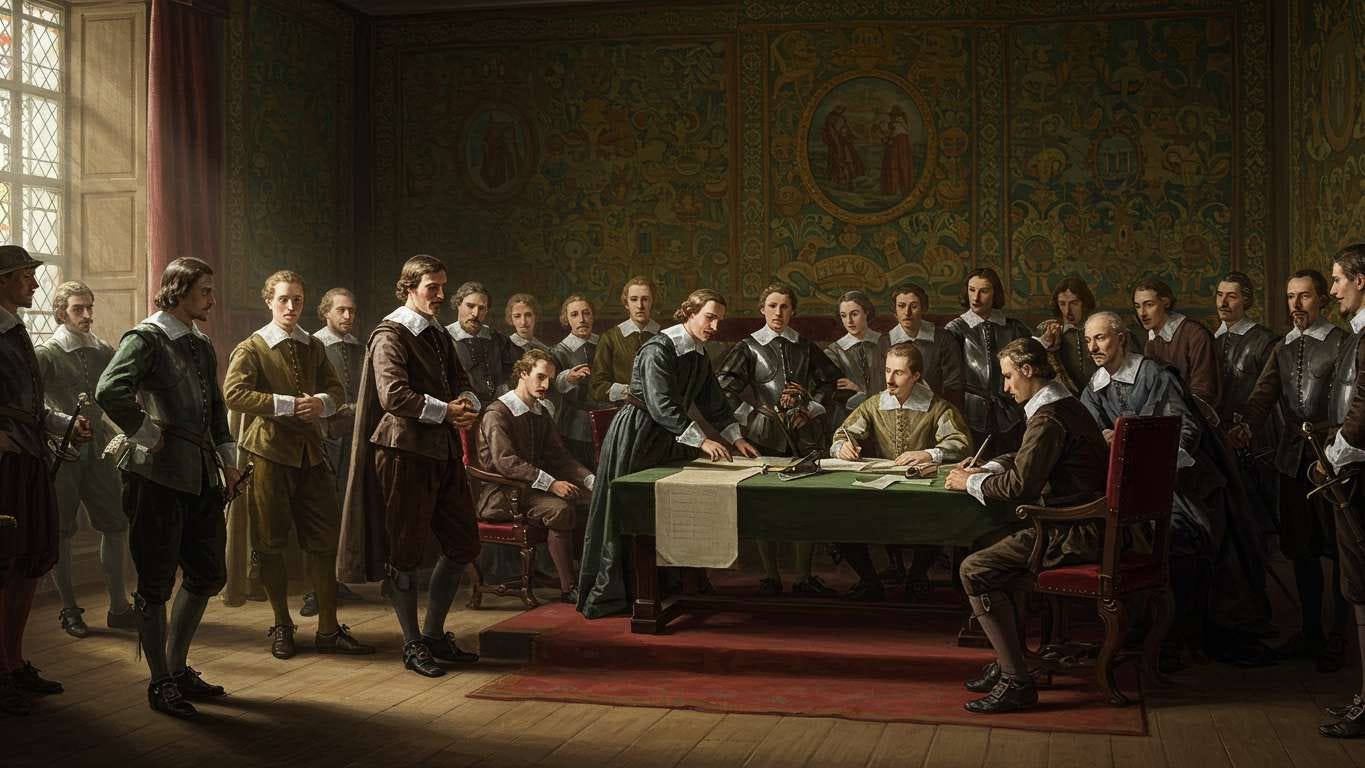
The Westphalian model, formalised in Europe in the seventeenth century and then exported, rests on three deeply embedded axioms. First, that the ultimate unit of political life is the sovereign state, bounded by borders and entitled to exclusive authority within them. Second, that legitimate power flows from the top down – from anointed representatives to passive populations. Third, that progress is measured in economic growth, with the industrial machine as its engine and the planet as feedstock.
Once those axioms are locked in, the outcomes are predictable. Summits become places where states haggle over relative advantage without questioning their own centrality. Corporations present themselves as indispensable partners rather than prime drivers of environmental and social harm. Civil society is given just enough space to legitimise the entire fiasco, not enough to derail it. Every communiqué is a promise to do more of the same, but slightly better.
By that yardstick, my verdict still stands. Examined against their stated purpose – to avert complete breakdown of society – these gatherings have failed. The atmospheric chemistry does not lie.
But if we only look at the plenary halls and press statements where civilisational decline is being managed, we might miss where the real action seems to be migrating.
The World Outside the Script
Over the years I have noticed a different dynamic gathering pace in the corridors, back rooms, temporary pavilions and improvised tables at the edges of these events. Cities exchanging hard‑won knowledge on how to rewire transport, housing, waste, and energy without waiting for national approval. Indigenous custodians asserting jurisdiction over forests and waters that predate any flag and will outlast most of them. Faith communities discovering mutual agendas that cut clean across doctrinal lines. Scientists, entrepreneurs, mayors, philanthropists, activists and investment managers forging uncommon alliances that are far more pragmatic than any intergovernmental text.
What has changed recently is not that such currents exist – they always did – but that their density and confidence have increased to the point where the formal process starts to look like an exoskeleton around an prehistoric organism. For three weeks during COP30, for instance, the “engines of real‑world change”, as someone described them, simply got on with it: designing the bridge from experiment to scale, drafting their own standards, exploring new legal tools, aligning flows of capital with lived realities on the ground.
Out of that ferment have come innovative ideas and practices that quietly chip away at those three Westphalian assumptions. Regions and cities proposing their own contributions and timetables, regardless of national hesitation. Citizen‑led processes that define what responsible action looks like in energy, food, housing, and health. Multi‑faith and cultural alliances insisting that ethics is not the private preserve of government chancelleries. Proposals for investment built on community stewardship rather than extractive opportunism.
These are not add‑ons to the official script. They are alternative scripts – underground nodes and axillary buds, multi‑level, hard to map – that treat the state and the mega‑corporation as one set of actors among many, not the apex of the pyramid.
Reconciling my previous assessment with this emergent reality requires a change of vantage point. If you insist on judging the mausoleum by the number of fresh flowers at its entrance, it will always disappoint. But look underneath, and you find the roots of another civilisation pushing through the cracks.
The Westphalian Spell
The real obstacle to genuine transformative change is not that states and corporations exist. It is that we struggle to imagine anything beyond their present form. The Westphalian arrangement has been so successful in erasing its own contingency that most people regard it as a sacred and immutable law of nature.
We’re schooled into seeing borders as givens, not recent inventions. We learn national histories in which all roads lead to the modern state. We’re taught that without some kind of central authority chaos beckons; that “stability” and “security” depend on standing armies, surveillance, and the sanctity of sovereign decision‑making. Even many activists still direct their appeals upwards – to presidents, parliaments, boards – as though the only adult in the room must be seated at the top of a recognised hierarchy.
Breaking that spell is not as simple as denouncing governments or corporations. It means loosening the deeper habits of deference and dependence that lead us to wait to be told what to do by the so-called “crème de la crème”, even when we know they are trapped in a doomed paradigm.
To escape that mental gravity we need to alter three things at once: where we locate identity, where we exercise agency, and where we recognise legitimacy. None of those shifts can happen solely at the grassroots, nor solely through “enlightened” leadership. They require an interplay between communities, city‑states, networks, and the remodelling – or partial sidelining – of legacy institutions.
Rerouting Identity: From Passport to Place and Practice
The nation‑state colonises identity by convincing us that being Australian, Thai, Brazilian, Kenyan or French is the primary filter through which we must interpret the world. Or else! This is reinforced on a daily basis: in constitutional rituals, media narratives, sporting spectacles, war memorials, and even schoolbooks. Yet in practice most of us live with layered, intersecting allegiances. A young woman in Lagos might feel more solidarity with other coders around the world than with the political elite governing Nigeria. A Rohingya refugee in Cox’s Bazar may feel deep belonging to a people who have no recognised state at all. A farmer in the Mekong delta may feel their truest loyalty is to the river whose cycles their community has followed for generations. The more we name and honour those other forms of belonging, the weaker the emotional monopoly of the passport becomes. That does not require abolishing national identity. It requires relativising it – admitting it into a larger ecology of attachments.
Here grassroots activism has a crucial role to play: not as softly sentimental community work, but as the practice through which people remember that they are members of watersheds, food webs, languages, crafts, faiths and cultures long ignored by the sterility of official geopolitics. When residents assemble to protect a neighbourhood from predatory development, when Indigenous nations defend ancestral lands against extractive projects sanctioned in distant capitals, when youth movements take their cues from the atmosphere rather than the electoral cycle, they are not merely petitioning power. They are asserting alternative identities that no state can finally contain.
Shifting the Locus of Decision‑Making
If identity begins to unhook from the state, the next logical step is for decision‑making to follow. The Westphalian imaginary insists that serious choices must be taken at the top, preferably in the capital city, by people who belong to a recognised political class. Local authorities, communities and associations are treated as subordinate – useful when they conform, disposable when they do not.
Reality no longer matches that script. Cities decide how people move, how buildings perform, how waste is handled, what gets planted, paved or preserved. Regions determine land use, water allocation, energy mix. Indigenous and local communities often manage forests, fisheries and soils with a subtlety and zeal no central ministry can match. Translocal networks share practical knowledge faster than any intergovernmental committee.
These are not simply “implementation arms” of national policy. Increasingly they are sources of original initiative. When mayors set their own emissions targets, when regions design cross‑border river compacts, when communities invent their own monitoring systems for pollution or biodiversity, they are relocating the locus of authority.
That relocation needs to be made explicit and durable. One way is through what some have begun to call State‑Determined Contributions set at sub‑national levels: city and regional commitments, anchored in their own fiscal and legal capacity, not as derivatives of national plans but as drivers in their own right. Another is through what I have started calling People‑Determined Contributions: citizens, cooperatives, neighbourhoods and movements specifying the changes they need and are undertaking – in energy, diet, mobility, care, education – and insisting that these count, politically and financially, rather than being invisible volunteerism propping up a failing order.
Neither move abolishes the state. But both diminish its monopoly on agenda‑setting.
Legitimacy on Trial
Sovereignty, as conventionally understood and applied, has rested on a simple circular argument: the state is legitimate because it is the state. It issues the laws, commands the police and military, regulates business, negotiates treaties. Everyone else operates inside that envelope, or outside it as villains, delinquents and anarchists.
That conceit is wearing thin. A government that protects investors but abandons citizens to floods, fires, pandemics or famine loses moral standing, even if it retains guns and policing. A petro‑state that continues to monetise destruction of the atmosphere may maintain its GDP figures, but it can’t plausibly claim to be protecting the future of its own children, let alone anyone else’s. A corporation that boasts of “net‑zero commitments” while funding political sabotage of climate policy is not a partner in progress; it is a saboteur, plain and simple.
The law is starting, haltingly, to acknowledge that the ultimate subject of protection is not the state or the shareholder, but the web of life itself. International courts and domestic tribunals have begun to entertain cases that frame environmental devastation as a violation of fundamental rights, or as a crime that transcends national jurisdiction. Campaigns to recognise ecocide as an international crime, or to give legal personhood to rivers and ecosystems, are manifestations of this trend.
Grassroots activism is essential here too. Courts only move when someone pushes them. Communities declaring a river sacred and legally protected. Citizens bringing class actions against polluters. Indigenous nations reasserting customary law over extractive concessions. Youth movements demanding that the rights of future generations be recognised explicitly. As these efforts accumulate, the monopoly of states and corporations over legitimacy begins to crack. Law once again becomes what it actually is: a contested cultural artefact, not a fixed command handed down from a distant Olympus.
The Double Life of Corporations
If the nation‑state is legacy infrastructure, large corporations are its most prominent tenants – and often its co‑designers. The industrial paradigm made them into quasi‑sovereign entities, able to pit jurisdictions against each other, capture regulators, underwrite political campaigns, and shape culture through advertising and control of media.
They, too, are also beginning to encounter limits they cannot explain and negotiate away. Resource depletion, climate chaos, social backlash, and new legal doctrines are undermining the assumptions that built the behemoths of the twentieth century. In some sectors the very notion of shareholder primacy is being challenged. Steward‑ownership, mission‑locked firms, platform cooperatives and commons‑based enterprises remain marginal at this stage, but they are no longer curiosities.
Here again, the emergent order is ambivalent. On one side, communities and cities are being rebranded as “investable assets” – surfaces on which capital can project its desire for yield, dressed up in acceptable social and environmental language. Grassroots energy risks being harvested as marketing content. On the other side, corporations are discovering they cannot operate without consent from actors they once studiously ignored: Indigenous councils, municipal networks, impact investors, activists, citizen‑led audit groups.
Which way this tips depends heavily on how much counter‑power communities, cities and workers can mobilise. If they remain fragmented, the old pattern will reassert itself: nice words at the edges, extraction at the core. If they connect, set their own standards, and link access to territory, data and labour to those standards, corporate forms will either adapt or be progressively stranded.
The point is not to fantasise about a world without large organisations, but to dethrone their presumed entitlement to define what counts as rational, profitable or inevitable.
Leadership Redefined and Reframed
This brings us back to the old chestnut of leadership. In the twentieth century imagination, change is the product of great men (almost always men) making bold decisions from elevated positions of authority. The rest of us watch, cheer or boo from the sidelines. When things go wrong, we curse “the leaders”. When things go right, we build statues.
That model has been bankrupt for some considerable time. The cherished cult of the powerful individual simply can’t cope with a world in which complexity and speed outrun the capacity of any small cabal, however brilliant, to oversee the whole. Nor can it cope with an ethical world in which people refuse to be treated as children.
Abandoning the conventional axioms of leadership doesn’t mean idealising a world without vision, coordination, or responsibility. It means redistributing those functions. Mayors, ministers, CEOs, judges and generals will not vanish overnight. Community organisers, elders, youth convenors, scientists, artists and spiritual teachers won’t suddenly be elevated into positions of power. What must change is the direction of accountability and the source of legitimacy.
In a post‑Westphalian mesh, leadership should look less like command and more like a collective choreography, an operatic chorus outshining the celebrity tenors. Those with access to formal authority – in states, firms or institutions – use it to remove obstacles, to redistribute resources, to protect experiments, to translate between scales. They stop pretending to be saviours. Those embedded in communities – the so‑called grassroots – stop waiting to be rescued. They acknowledge their own authority to initiate, decide and refuse.
The most urgent question then becomes not “Who will lead us?” but ‘How will we organise so that no layer, no office, no institution can hold the rest of us hostage to a fading worldview?”
Two Civilisations, One Planet
We’re living through a bifurcated reality that has gone largely unnoticed. On one channel: the familiar civilisation of industrial capitalism. Its texts are national security strategies, GDP statistics, market indices, entrepreneurial tax breaks, and geopolitical doctrines. Its reflexes are militarisation, competition, securitisation, border fortification, and extraction dressed up as development – now increasingly supercharged by digital platforms, predictive algorithms, and ubiquitous surveillance. It tries to present itself as history’s endpoint.
On the other channel: an emergent civilisation of sufficiency and mutual responsibility. Its texts are community agreements, bioregional plans, citizens’ assemblies, the commons, worker‑owned charters, open‑source design repositories. Its reflexes are repair, restoration, regeneration and refusal. It makes no grandiose claims, partly because it’s still feeling its way, partly because it has no single centre from which to broadcast triumphalism.
The global summits sit awkwardly between these two channels. Officially they belong to the first. Symbolically they are rituals of Westphalian continuity. Practically, however, they are becoming meeting points where the second can find its reflection, replicate itself, and grow.
This is why I no longer see them as simply failures, even though they are manifestly failing to do what they say on the label. They are mausoleums hosting a wake at which, unbeknownst to the hosts, the guests have started planning life after the funeral.
What It Will Take to Escape the Gravity Well
If we accept that the Westphalian system is not a preordained law of nature but just a particular historical arrangement, then the question becomes: how do we achieve escape velocity before ecological and social breakdown close the window for civilised choice?
There will be no single decisive moment. No world government. No immaculate revolution. Instead we should expect a protracted period of contested transitions in which elements of the old and the new co‑exist, wrestle, overlap and sometimes fuse. To tilt that struggle in favour of life, three types of work seem especially vital.
First, scaling and connecting grassroots practice so it becomes an alternative architecture, not a patchwork of isolated initiatives. Community energy projects, food sovereignty movements, citizen assemblies, cooperatives, mutual aid networks, Indigenous stewardship arrangements – these must increasingly see themselves as parts of a shared project, exchanging learning horizontally rather than appealing vertically for recognition.
Second, repurposing states and corporations where possible – and routing around them where not. In some cases, governments and firms will prove willing to act as platforms: hosting citizen deliberation, underwriting commons‑based infrastructures, accepting legal constraints that bind them to ecological and social thresholds. In other cases, we must expect them to dig in as spoilers. There, the answer is not moral outrage but strategic bypass: cities taking over functions, communities building shadow systems, legal action narrowing the room for harm, disinvestment and non‑cooperation starving predatory actors of oxygen.
Third, freeing our own imaginations from the default of deference. This is cultural work. Storytellers, educators, faith leaders, elders and youth have a central role to play in loosening the mental knot that equates order with obedience to a hierarchy. We need narratives and practices that make distributed responsibility feel ordinary, not radical: children learning conflict resolution and cooperative design as core skills; media that highlight quiet, locally led successes instead of revolving endlessly and indignantly around the scandal‑of‑the‑day from high office; spiritual traditions reclaiming their capacity to contest worldly powers that treat life as expendable.
Reconciling Past Judgements with Present Possibilities
So, have the great gatherings failed? Yes – if we read only their declarations. They have not halted the juggernaut of industrial economism, nor reconfigured the Westphalian chessboard.
But if we widen the lens, a more subtle and optimistic picture emerges. Around and beneath their official performances, they have inadvertently convened the very actors who are no longer prepared to live inside the old imagination. They have focused attention and resources in ways that allow the “messy middle” to function as a prototype laboratory for a different way of organising life.
In my bones I know that the future will not be written in the negotiation halls; I stand by that. It’s being written in city halls, community gardens, tribal councils, cooperatives, hacker spaces, monasteries, mosques, churches, temples, labs, and kitchens. It is also, still, being written in some boardrooms and ministry offices – but only when those inside are prepared to treat their own authority as contingent and reversible, rather than absolute.
The Westphalian order taught us to look up and wait. A post‑nation world will be built by those who look around, and start. The question is no longer whether such a world is unthinkable. It has already begun, in fragments. The real question – for each of us, wherever we are – is how much longer we intend to lend our faith, our attention and our labour to a mausoleum, when the living work is happening everywhere else.