
Islamophobia and Antisemitism
Deliberate Ploys for Profit and Control

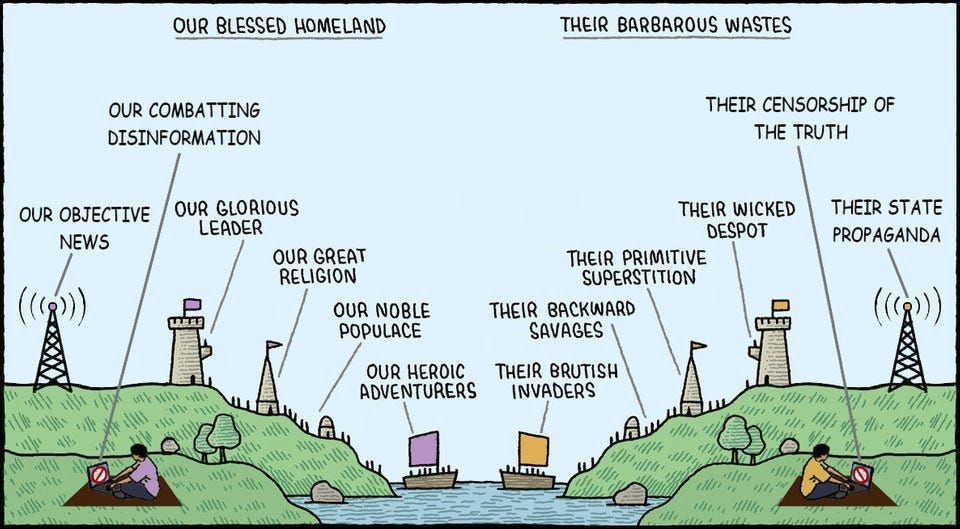
In the ever-evolving panorama of Homo sapiens on Earth, displays of antisemitism and Islamophobia (along with racism, misogyny and an entire catalogue of hate-based phobias) stand as bleak reminders of our collective capacity for division and scorn. These are not just spontaneous outbreaks of prejudice but carefully crafted strategies to manipulate and control, mostly serving the interests of the rich and powerful. As a futurist and current affairs commentator, I’m compelled to explore these dynamics, not just to understand their origins and impacts, but to challenge the assumptions that underpin them and envision a future where such loathing is no longer a tool for discord and division.
The roots of antisemitism run deep through European history, where Jewish communities endured centuries of persecution, expulsion, and systematic scapegoating during periods of economic upheaval and social transformation. This historical pattern reveals something crucial about how worldviews (or shared belief systems) become embedded in world-systems (corporeal realities and operating systems): the deliberate construction of an ‘other’ serves to deflect attention from the failures and exploitations of ruling structures. When harvests failed, when plagues struck, when economies collapsed, those holding power found it convenient to redirect popular anger toward minorities rather than address systemic inadequacies. This wasn’t accidental or merely the product of ignorant masses—it was strategic, institutionalised through law, reinforced through religious doctrine, and transmitted across generations until it became woven into the cultural convictions of entire civilisations.
Islamophobia, whilst drawing on older Orientalist frameworks that portrayed Eastern societies as exotic, dangerous, and fundamentally alien to Western rationality, intensified dramatically following the attacks of September 11th, 2001. What’s particularly instructive about this amplification is how rapidly a worldview can be reshaped when those controlling information flows and prevailing narratives decide it serves their interests. Within months, Muslim communities that had lived peacefully integrated into Western societies for generations found themselves reimagined as potential threats, their mosques surveilled, their travel restricted, their very presence in public space treated as suspect. The speed of this transformation should give us pause: if collective perceptions can shift so dramatically in one direction, might it not shift equally in another, given different conditions and different choices about how we structure our information ecosystems and capacity for sense-making?
The distinction between these two forms of prejudice matters because it reveals how worldviews adapt to serve similar functions across different historical moments. Antisemitism has typically manifested through conspiracy theories about hidden power and disproportionate influence, casting Jewish communities as puppet masters manipulating events from behind the curtain. Islamophobia more commonly centres on visible threat and cultural incompatibility, portraying Muslim communities as foreign bodies within Western civilisation, incapable of integration and harbouring violent intentions. Yet both serve the same essential purpose within the world-systems that perpetuate them: they provide simple explanations for complex matters, they unite in-groups against manufactured out-groups, and they justify policies that concentrate power and resources whilst appearing to protect the majority.
Media representation doesn’t simply reflect these prejudices—it actively constructs and reconstructs them through daily repetition and selective emphasis. When coverage of Muslim communities focuses overwhelmingly on extremism whilst ignoring the mundane reality of most Muslim lives, when Jewish characters in entertainment consistently embody financial stereotypes, when news anchors can make casual remarks linking religious identity to threat without professional consequence, we’re witnessing not just bias but the active production of a shared story that normalises discrimination. The question we might legitimately pose is whether this represents conscious conspiracy or emergent pattern. Perhaps the answer matters less than we think. Whether deliberately orchestrated or arising from the structural incentives embedded in media business models—where fear generates attention and attention generates revenue—the effect remains the same: prejudice becomes profitable, and profit ensures that prejudice persists.
In societies experiencing declining religious observance, the fixation on visible religious markers like the hijab and yarmulke reveals something peculiar about how cultural mindsets operate. As fewer people engage with religious practice themselves, these symbols become increasingly abstracted from their actual meaning within faith traditions and transformed into pure signifiers of difference and threat. The veil ceases to represent a woman’s personal relationship with modesty and the divine; it becomes instead a walking referendum on multiculturalism, integration, women’s rights, and Western values. The yarmulke stops being a simple expression of Jewish observance and becomes freighted with assumptions about loyalty, insularity, and political allegiance. This abstraction allows those who know virtually nothing about Islam or Judaism to nonetheless feel confident in their judgements about Muslim and Jewish communities, because they’re no longer really engaging with religious traditions at all—they’re responding to symbols that have been emptied of their original content and refilled with whatever anxieties and resentments happen to be circulating through the culture at that moment.
The persistence of these prejudices despite their obvious irrationality demands explanation. Jewish communities exhibit extraordinary diversity in their political views, economic circumstances, levels of religious observance, and cultural practices, yet antisemitic narratives treat them as monolithic. Muslim communities span continents, encompass dozens of distinct cultural traditions, include both the devoutly religious and the entirely secular, yet Islamophobic discourse collapses all this complexity into a single threatening mass. How do such demonstrably false characterisations maintain their grip on the collective imagination? Part of the answer lies in understanding how worldviews function not as accurate maps of reality but as organising principles that give shape and meaning to otherwise overwhelming complexity. When people feel their economic security eroding, when familiar cultural landscapes transform in ways they find disorienting, when the future appears uncertain, brittle and threatening, simplified narratives that identify clear villains and promise clear solutions become psychologically attractive regardless of their basis in facts.
Economic interests intertwine with these dynamics in ways that deserve closer scrutiny. The security and intelligence industries have expanded enormously in the decades since 2001, creating entire sectors whose continued profitability depends on sustained perception of both domestic and foreign threat. Is it merely coincidental that these industries have grown precisely as the threats they ostensibly protect against have been magnified through media coverage and political rhetoric? The question isn’t whether genuine security challenges exist—they clearly do—but whether the scale and nature of our responses match the actual risks or instead reflect the influence of entities that profit from threat inflation. When airline passengers still remove shoes and belts two decades after a single failed bombing attempt, when surveillance systems monitor entire communities based on religious affiliation rather than evidence of wrongdoing, when digital ID schemes are use as the basis for pre-crime arrest warrants, and when military interventions are justified through exaggerated claims about distant dangers, we might reasonably ask whether security has become less about protection and more about profit.
This economic dimension extends beyond the security sector. Discrimination in employment, education, healthcare, housing, and lending creates conditions where targeted communities experience systematic economic disadvantage. This disadvantage then becomes cited as evidence for the very stereotypes that justified the discrimination in the first place, creating a self-reinforcing cycle. When Jewish communities succeed economically despite discrimination, this success gets reinterpreted through antisemitic frameworks as evidence of manipulation and undue influence. When Muslim communities struggle economically as a result of discrimination, their struggle gets reinterpreted through Islamophobic lenses as evidence of cultural inadequacy and a failure to integrate. The worldview thus immunises itself against contrary evidence: any outcome can be made to confirm the prejudice if the interpretive framework is sufficiently flexible.
Political power represents possibly the most pernicious and significant beneficiary of sustained intergroup prejudice. By fracturing societies along lines of religious and ethnic identity, political actors can build coalitions based on fear and resentment whilst avoiding accountability for policy failures that affect everyone regardless of background. When citizens view each other primarily as threats rather than as fellow participants in a shared political community, the possibility of unified opposition to concentrated power diminishes dramatically. This fragmentation serves those who benefit from existing arrangements whilst harming nearly everyone else, yet the self-same communities being manipulated often become the most vigorous defenders of the politicians exploiting them. How does this paradox operate? When your worldview has been shaped to perceive certain groups as existential threats, individuals who promise to protect you from those threats can demand almost unlimited loyalty in exchange, even as their actual policies undermine your material interests.
The general public’s role in perpetuating these dynamics operates largely through mechanisms that bypass conscious awareness and critical evaluation. Social conditioning begins early, transmitted through family attitudes, educational curricula, media consumption, and peer group norms. By the time individuals develop the cognitive capacity for critical reflection, many prejudiced assumptions have already been absorbed and integrated into their basic understanding of how the world works. Social media algorithms intensify this process by creating information environments where people encounter primarily content that confirms their existing beliefs whilst filtering out contrary perspectives. Fear, particularly when repeatedly activated through sensationalised coverage of rare but dramatic events, overrides rational assessment of actual risk levels. A single terrorist attack receives orders of magnitude more attention than the thousands of daily interactions between communities that proceed without incident, skewing perception of what’s normal and what’s exceptional.
Yet describing the public as passive victims of manipulation oversimplifies the dynamic. People actively participate in constructing and maintaining prejudiced mindsets because these worldviews serve psychological and social functions. Belonging to an in-group provides identity, meaning, and community. Identifying out-groups as threatening reinforces in-group cohesion and provides simple explanations for complex anxieties. Prejudice allows individuals to feel superior without achievement, to explain their own struggles without confronting uncomfortable truths about ingrained inequality, to experience moral clarity without the difficulty of genuine ethical reasoning. When someone’s sense of self and community has been built around particular prejudices, challenging those prejudices feels like an attack on their identity rather than an invitation to more accurate understanding and appreciation.
The claim that certain religious or ethnic groups pose inherent threats whilst others represent inherent superiority collapses under the slightest scrutiny, yet such claims persist across cultures and throughout history. Equally absurd are assertions that any group constitutes a divinely chosen people with special status or entitlements. These worldviews share a common structure: they imagine human worth as hierarchical rather than universal, they treat accidents of birth as determinants of character and capability, they mistake cultural difference for fundamental incompatibility. What’s particularly striking is how these structures mirror each other across supposed divides. Zionist supremacist ideologies and Islamic extremist doctrines, Hindu nationalism and white Christian nationalism—all employ remarkably similar logic despite emerging from vastly different traditions. Each claims unique access to truth, each portrays outsiders as threats or inferiors, each justifies discrimination or violence through theological or cultural reasoning. Recognising these structural similarities might help us understand that the problem isn’t any particular tradition but rather the supremacist impulse itself, which can attach itself to virtually any identity marker when conditions favour its emergence.
These patterns manifest globally, not as Western impositions but as recurring dynamics that emerge wherever human societies experience stress, competition, and power imbalances. In India, rising Hindu nationalism has corresponded with intensified violence against Muslim minorities, with lynchings, discriminatory legislation, and rhetoric that casts Muslims as foreign invaders despite their centuries-long presence on the subcontinent. In Myanmar, Buddhist nationalism—a seeming paradox given Buddhism’s emphasis on compassion—has justified ethnic cleansing of Rohingya Muslims. In China, Uyghur Muslims face mass detention, cultural erasure, and surveillance systems that track their every movement. Across the Middle East and North Africa, antisemitism persists and sometimes strengthens, often entangled with opposition to Israeli state policies in ways that blur legitimate political criticism with prejudice against Jewish people generally. These examples span different religions, political systems, and economic conditions, suggesting that whilst specific manifestations vary by context, the underlying dynamics operate across human societies regardless of their particular characteristics.
This global recurrence invites us to think beyond conventional political categories. The tendency to locate prejudice exclusively on the political right or left obscures how these dynamics transcend such divisions. Antisemitism appears in right-wing conspiracy theories about global financial manipulation and in left-wing discourse that sometimes slides from criticism of Israeli policies into broader condemnation of Jewish communities. Islamophobia manifests in right-wing nationalism that portrays Muslims as civilisational threats and in left-wing discourse that sometimes treats Muslim communities as uniformly regressive on gender and sexuality. The worldview that enables prejudice—one that sees human worth as conditional, that mistakes correlation for causation, that privileges emotional reaction over evidence, that treats complex realities as simple narratives—this worldview doesn’t map neatly onto our inherited political spectrum. It operates orthogonally to those categories, which is precisely why challenging it requires thinking that transcends conventional ideological boundaries.
The issue of whether these prejudices result from deliberate conspiracy or emergent patterns deserves careful consideration. Certainly some actors consciously exploit prejudice for political or economic gain. Politicians craft campaign messages designed to activate fear of particular groups. Media outlets make editorial decisions that emphasise certain stories whilst ignoring others. Security companies lobby for policies that expand their markets. Yet the system as a whole operates without anyone necessarily orchestrating it from above. Once a particular worldview becomes embedded in institutions, once cultural mindsets normalise certain assumptions, once economic incentives align around particular outcomes, the ‘congealed’ system reproduces itself through the accumulated choices of millions of individuals, most of whom don’t perceive themselves as prejudiced and many of whom would be horrified to recognise their role in perpetuating discrimination. This distributed nature of the problem makes it simultaneously more insidious and more amenable to intervention—insidious because there’s no single villain to defeat, amenable because acupuncture points for 2nd- and 3rd-order change can be found anywhere within the system rather than requiring capture of some central controlling mechanism.
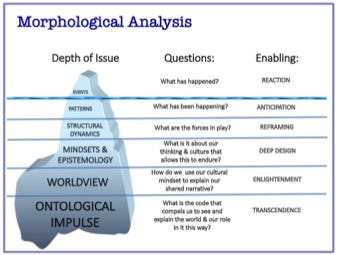
Understanding how worldviews manifest as world-systems and then get interpreted through cultural mindsets helps clarify why prejudice proves so persistent despite repeated efforts to combat it. Morphologically speaking, a worldview represents, at the deepest level possible, fundamental assumptions about how the world works, what human nature entails, and how societies should be organised. When a worldview treats human worth as hierarchical and conditional, when it imagines societies as inherently competitive rather than potentially cooperative, when it assumes scarcity rather than possibility and abundance, these foundational assumptions shape everything built upon them.
The world-system emerges from these assumptions—the actual institutions, laws, economic structures, and power arrangements that govern daily life. If the underlying worldview treats certain groups as threatening or inferior, the world-system will inevitably reflect this through discriminatory policies, unequal resource distribution, and hierarchical social arrangements, even when explicit prejudice is formally prohibited. Cultural mindsets represent how individuals and communities interpret and navigate the world-system they inhabit. They are the granular fortifying or rebellious elements within the prevailing worldview, but they operate within constraints established by existing structures. Someone raised in a world-system built on prejudiced assumptions will find those assumptions reflected everywhere—in media representations, in institutional practices, in casual social interactions—making them appear natural and inevitable rather than constructed and changeable. This is why someone raised within the Sinic world-system will value the wisdom of the crowd and the Chinese nation as family community, more easily than someone raised in the Occidental world-system who will value the autonomy of the individual and scientific realism.
This three-level analysis reveals why simply educating individuals about prejudice often fails to produce universal change. You can alter someone’s mindset, help them recognise their biases and commit to treating others with dignity, yet if they return to institutions and structures built on prejudiced worldviews, the system will reassert itself. The reformed individual faces constant pressure to conform, finds their inclusive impulses thwarted by institutional inertia, and may eventually conclude that change is impossible. Conversely, changing policies without redesigning underlying worldviews produces superficial compliance that masks continued discrimination. Organisations adopt diversity statements whilst maintaining cultures that exclude. Governments pass anti-discrimination laws whilst preserving economic arrangements that perpetuate inequality. The forms change whilst the substance remains largely intact.
Genuine transformation requires simultaneous intervention at all three levels—challenging the foundational worldview that treats human worth as conditional, restructuring the world-systems that institutionalise discrimination, and tuning the cultural mindsets through which people interpret their experience. This explains why progress often seems frustratingly slow and non-linear. You cannot simply replace one worldview with another through rational argument, because worldviews operate largely below conscious awareness and are reinforced by everything from childhood socialisation to institutional practices to the physical organisation of space. You can’t instantly restructure world-systems, because existing arrangements benefit powerful actors who resist change, and because dismantling one structure without having alternatives ready risks creating chaos. You cannot rapidly shift cultural mindsets when the world-system people navigate daily contradicts the values you’re trying to promote.
Yet this same analysis suggests grounds for realistic hope. Because the system operates at multiple levels with complex feedback loops, intervention at any point can eventually cascade through the entire structure. Changing enough individual mindsets creates pressure for institutional reform. Restructuring institutions makes new mindsets possible and normalises different assumptions. Challenging foundational worldviews—through art, philosophy, spiritual practice, or visionary politics—plants seeds that may take generations to fully germinate but that ultimately reshape what now seems possible. The issue isn’t whether change can occur but whether a critical mass of people, across a sufficient number of positions within the system, commit to the sustained effort required.
The role of information and communication ecosystems in either perpetuating or challenging prejudice cannot be overstated. Throughout most of human history, information flowed through relatively constrained channels—oral tradition, religious institutions, eventually print media and broadcasting. These channels could certainly transmit prejudice, but they also imposed some limits through editorial gatekeeping, professional norms and sanctions, and the simple constraint that producing and distributing information required significant resources. Digital transformation has simultaneously democratised information production but eliminated most quality controls. Anyone can now broadcast to a potentially global audience at minimal cost. Algorithms optimised for engagement amplify whatever content generates strong emotional reactions, regardless of accuracy or impact. The result is an information environment where prejudiced narratives can spread with unprecedented speed whilst corrections and context struggle to gain equivalent traction.
This creates a peculiar situation where people have access to more information than ever before yet often understand less, because the information environment has become so polluted with misinformation, so fragmented into incompatible realities, so optimised for confirmation rather than challenge, that navigating it requires skills most people haven’t developed and time most people don’t have. When someone can find apparently credible sources confirming virtually any prejudice, when algorithms ensure they encounter primarily perspectives that reinforce existing beliefs, when the emotional satisfaction of outrage and tribal belonging outweighs the cognitive effort required for critical evaluation, the information abundance that was supposed to enlighten instead often entrenches ignorance.
Does this mean the digital transformation has been entirely negative for efforts to combat prejudice? Not necessarily. The same technologies that spread misinformation also enable previously marginalised voices to bypass traditional gatekeepers and speak directly to audiences. Communities facing prejudice can document their experiences, challenge stereotypes, and build solidarity across borders in ways previously impossible. Researchers can access vast datasets revealing patterns of discrimination that were previously hidden or deniable. Organisers can coordinate action at scales and speeds that would have seemed fanciful just decades ago. The technology itself is neutral; what matters is how worldviews, world-systems, and cultural mindsets shape its deployment and use.
Consider how differently information technology might function if it emerged from a worldview that prioritised human flourishing over profit maximisation, that treated attention as a precious resource to be protected rather than a commodity to be extracted, that understood connection as qualitative rather than just quantitative. The algorithms could be designed to expose people to perspectives that challenge rather than confirm, to elevate accuracy over engagement, to build understanding across difference rather than reinforcing tribal boundaries. The business models could reward depth over virality, context over sensation, bridge-building over polarisation. None of this would require technology that doesn’t already exist; it would simply require different choices about how to deploy that technology, choices that reflect alternative underlying values and serve different interests.
The economic dimensions of sustained prejudice extend far beyond the security sector, permeating virtually every aspect of how resources flow through society. When certain communities face discrimination in lending, they accumulate less wealth across generations, creating disparities that appear to validate stereotypes about capability and work ethic whilst actually reflecting systematic exclusion from wealth-building opportunities. When employers discriminate in hiring and promotion, talented individuals from targeted communities contribute less than they could, representing not just injustice to those individuals but economic loss to society as a whole. When governments allocate resources unequally—funding schools in some neighbourhoods whilst neglecting others, providing infrastructure and services that follow demographic lines—they create material conditions that reinforce prejudices about which communities are productive and which are burdensome.
These economic arrangements don’t persist primarily because of individual prejudice, though that certainly plays a role. They persist because they serve the interests of those who benefit from existing distributions of wealth and power. When working people can be divided along lines of religion or ethnicity, they’re far less likely to unite around shared economic interests that might threaten concentrated wealth. When communities can be portrayed as drains on resources rather than contributors, policies that redistribute wealth upward can be justified as protecting productive members of society from undeserving others. When some communities remain economically marginalised, they provide a ready supply of desperate workers willing to accept low wages and poor conditions, keeping labour costs down and profits up. The prejudice serves the economic function, and the economic function ensures the prejudice persists.
What becomes clear through this analysis is that antisemitism and Islamophobia, whilst having distinct histories and manifestations, operate within a broader logic of domination that extends to all forms of systematic dehumanisation. The same worldview that enables antisemitism enables racism. The same world-system that institutionalises Islamophobia institutionalises misogyny. The same cultural mindsets that normalise prejudice against religious minorities normalise prejudice against anyone marked as ‘other’. This isn’t to claim that all forms of oppression are identical—they clearly aren’t, and effective responses must account for their idiosyncrasies. But it is to recognise that they share structural similarities and often reinforce each other, which means that liberation movements have inherent common interests even when they address different forms of discrimination.
This recognition has profound implications for how we think about deep social change. Movements that challenge prejudice against one group whilst perpetuating prejudice against another undermine their own moral foundation and strategic effectiveness. When those fighting antisemitism traffic in Islamophobic rhetoric, when those combating Islamophobia accept antisemitic narratives, when either ignores other forms of systematic discrimination, they replicate the very logic they claim to oppose. The worldview that enables any form of dehumanisation will eventually enable all forms, because once you accept that human worth is conditional rather than inherent, that some people matter less than others, that hierarchy rather than dignity should organise society, you’ve conceded the fundamental premise that justifies all oppression.
Conversely, movements that recognise the links between different forms of domination, that build solidarity across communities facing different but related forms of prejudice, that understand liberation as indivisible rather than competitive—these movements are able to tap into far greater transformative potential. They can’t be divided and conquered as easily. They build broader coalitions. They challenge the foundational worldview rather than simply contesting one of its many manifestations. They prefigure in their own practice the world they seek to create, where difference is celebrated rather than feared, where dignity is universal rather than conditional, and where cooperation replaces domination as the most fundamental organising principle of social life.
The question of how individuals become complicit in systems of prejudice without consciously choosing bigotry deserves deeper examination. Most people, if asked directly, would affirm belief in human equality and reject overt discrimination. Yet these same people participate daily in systems that produce discriminatory outcomes. They shop at businesses that discriminate in hiring. They go to clubs that exclude women as members. They consume media that perpetuates stereotypes. They benefit from economic arrangements built on historical exclusion. They vote for politicians who employ coded prejudice. They remain silent when colleagues make prejudiced remarks. They accept security measures that target specific communities. How do people maintain positive self-concepts whilst participating in oppressive systems?
Part of the answer lies in how world-systems tend to distribute moral responsibility. When discrimination results from accumulated institutional practices rather than individual malice, operating through algorithmic sorting rather than explicit exclusion, and when it appears as neutral policy rather than targeted prejudice, individuals can participate without feeling personally culpable. The hiring manager who relies on algorithms that perpetuate bias can claim they’re simply following data-driven best practices. The news editor who disproportionately covers violence by certain groups can claim they’re merely responding to newsworthiness. The politician who supports discriminatory security measures can claim they’re just prioritising public safety. Each individual decision seems defensible in isolation. It’s only when you examine the pattern across millions of decisions that the systematic nature of the discrimination becomes apparent.
This diffusion of responsibility represents one of the most insidious features of modern-day prejudice. Unlike the explicit bigotry of earlier eras, contemporary discrimination often operates through mechanisms that allow everyone involved to deny prejudiced intent. The world-system produces discriminatory outcomes whilst the cultural mindsets of those operating within it remain largely unconscious of their role in perpetuating those outcomes. This makes challenge more difficult, because you’re not confronting obvious villains but rather well-intentioned people who genuinely don’t perceive themselves as prejudiced and who can point to plausible alternative explanations for every discriminatory outcome.
Yet this same feature suggests intervention points. If prejudice operated only through conscious malice, changing it would require changing hearts, a notoriously difficult task. But if prejudice operates largely through institutional arrangements and unconscious assumptions, then changing those arrangements and making those assumptions visible creates possibilities for transformation even among people whose underlying attitudes remain unchanged. You don’t need to convert everyone to antiracist ideology; you need to restructure systems so that they produce equitable outcomes regardless of individual attitudes. You don’t need to eliminate all prejudiced thoughts; you need to create accountability mechanisms that prevent those thoughts from translating into discriminatory actions.
I am not suggesting that individual transformation doesn’t matter—it clearly does. But it reframes the challenge in more tractable terms. Rather than imagining we must somehow purify human hearts of all prejudice - an impossible task - we can focus on building systems that channel even the most imperfect humans toward more equitable outcomes. Rather than waiting for everyone to overcome their biases before attempting structural change, we can implement structural changes that make bias more visible and more costly, creating conditions under which people have incentives to examine and modify their assumptions.
The global nature of these dynamics—the fact that similar patterns of prejudice emerge across vastly different cultural contexts—suggests something important about human societies under certain conditions. We’re not dealing with problems unique to particular traditions or regions but with recurring patterns that emerge from how human psychology interacts with social organisation under conditions of competition, inequality, corruption and rapid change. When resources are scarce or perceived as scarce, when established hierarchies face challenge, when familiar cultural landscapes transform in disorienting ways, when those holding power seek to maintain their position dishonestly—under these conditions, prejudice against designated out-groups emerges with depressing regularity across all human societies.
This universality might seem discouraging, suggesting that prejudice represents an inescapable feature of human nature. But the same evidence that reveals prejudice’s recurrence also reveals its malleability. The specific groups targeted vary enormously across time and place. The intensity of prejudice waxes and wanes. Societies that once exhibited extreme prejudice against particular groups later integrate those groups relatively successfully. This variation demonstrates that whilst the capacity for prejudice may be universal, its activation and direction depend on social conditions that humans create and can therefore change.
What would it mean to take seriously the premise that worldviews can be chosen rather than simply inherited? Throughout most of human history, individuals had little choice about the worldviews they inhabited. Born into particular cultures, embedded in specific traditions, lacking access to alternative perspectives, people naturally absorbed the assumptions of their societies and transmitted them to subsequent generations. The globalisation of information and the acceleration of cultural exchange have created unprecedented possibilities for worldview choice. Someone born in one tradition can now encounter dozens of alternatives, compare their assumptions, evaluate their consequences, and potentially adopt fundamentally different ways of understanding reality. Indeed this has happened to me personally. By rejecting the English empirical tradition into which I was born, and moving to a more genuinely egalitarian culture, I was able to align my assumptions about how I thought the world should work with the reality around me.
This possibility creates both opportunity and crisis. The opportunity lies in the potential for more people to consciously examine and potentially transform the worldviews they’ve inherited, choosing instead frameworks more conducive to human flourishing and planetary sustainability. The crisis emerges because worldview choice can generate profound anxiety and disorientation. When the frameworks that gave meaning and structure to existence become optional rather than inevitable, when competing worldviews make incompatible claims about fundamental questions, when no single authority can adjudicate between them, many people experience this freedom as terrifying rather than liberating. The retreat into fundamentalisms of various kinds—religious, political, cultural—represents one response to this crisis, an attempt to reimpose certainty and eliminate the burden of choice by declaring one worldview uniquely true and all others dangerously false.
Prejudice thrives in this environment of worldview crisis. When people feel unmoored from traditional certainties, when rapid change makes the future even more unpredictable, when economic insecurity threatens material wellbeing, the psychological appeal of simple narratives that identify clear villains and promise restoration of lost stability becomes overwhelming. Demagogues understand this dynamic. They exploit it ruthlessly, offering prejudiced paradigms as solutions to the very anxieties created by the disruption of traditional worldviews. The immigrant becomes the explanation for economic precarity that actually results from capital mobility and labour market restructuring. The religious minority becomes the threat to cultural identity that actually faces challenge from globalisation and technological change. The conspiracy of hidden elites becomes the explanation for political dysfunction that actually results from the corruption of democratic institutions by concentrated wealth.
These scapegoating narratives work precisely because they contain fragments of truth wrapped in fundamentally false frameworks. Economic conditions have deteriorated for many people—but it’s not because of immigration. The truth is that immigration in countries like the US, Britain and Australia, often becomes the mainstay for increased productivity. Cultural landscapes have transformed—but not because of religious minorities. Power has concentrated in ways that undermine democracy—but not through the mechanisms described by antisemitic conspiracy theories. The grain of truth makes the narrative plausible enough to gain initial acceptance, after which confirmation bias and tribal reinforcement make it resistant to correction. Someone who has accepted the framework interprets all subsequent evidence through it, finding confirmation everywhere and dismissing contrary evidence as manipulation or naivety.
Breaking this cycle requires more than presenting facts, because the problem isn’t primarily factual ignorance but framework adoption. Once someone has accepted a prejudiced worldview as their interpretive lens, facts that contradict it become invisible or get reinterpreted to fit. What’s needed instead is framework challenge—exposing the worldview’s internal contradictions, revealing its failure to explain phenomena it claims to address, demonstrating the superior explanatory power of alternative frameworks, and perhaps most importantly, addressing the psychological needs the prejudiced worldview serves so that people have viable alternatives rather than simply having their meaning-making structures demolished without replacement.
This suggests that effectively challenging prejudice requires not just the debunking of specific stereotypes but offering compelling alternative worldview narratives that provide sufficient meaning, identity, and community without requiring the dehumanisation of others. What might such worldviews look like? They would need to acknowledge rather than deny the real anxieties people face—economic insecurity, future uncertainty, a lack of control. They would need to provide satisfying explanations for these challenges that direct attention toward actual causes rather than scapegoats. They would need to offer visions of collective flourishing that are inclusive rather than exclusive, that see diversity as enriching rather than threatening, that understand cooperation as more generative than domination by a country mile. They would need to be emotionally compelling, not just intellectually coherent, because worldviews operate at least as much through emotions as through reason.
Some such worldviews already exist, embedded in various wisdom traditions, philosophical systems, and emerging social movements. Indigenous cosmologies that understand humans as embedded in rather than separate from nature, that see the flourishing of the whole as prerequisite for the flourishing of the parts, that organise societies around reciprocity rather than accumulation. Contemplative traditions that recognise the constructed nature of the self and therefore the artificiality of rigid boundaries between self and other. Democratic socialist visions that understand individual freedom as requiring collective provision of basic needs, that see economic democracy as inseparable from political democracy. Feminist frameworks that challenge patriarchy itself rather than simply seeking to include more people within existing hierarchies. Cosmopolitan philosophies that extend moral consideration across all of humanity whilst respecting cultural particularity.
None of these represents a complete or perfect worldview; I suspect such a phenomenon simply doesn’t exist. Each faces its own challenges and internal contradictions. But they demonstrate that alternatives to domination- and colonial-based worldviews exist and have proven viable across different contexts and scales. Alternative worldviews are possible, we have seen many rise and fall over the course of human history. The question is whether they new ones can be transmitted and adopted widely enough and rapidly enough to address the accelerating crises—ecological, economic, political—that domination-based worldviews have generated.
The relationship between prejudice and these broader crises deserves emphasis. Antisemitism and Islamophobia aren’t separate problems from climate change, economic inequality, or democratic decline—they’re manifestations of the same underlying worldview that treats some lives as disposable, that imagines wellbeing as competitive rather than collective, that prioritises short-term advantage for the few over long-term flourishing for the many. A civilisation that accepts the brutal dehumanisation of some humans will inevitably accept the ruthless degradation of ecosystems, the immiseration of workers, the corruption of democratic institutions, because all these outcomes flow from the same basic assumption: that the world exists to be dominated and extracted from rather than to be inhabited with love, care and reciprocity.
This means that efforts to combat prejudice aren’t tangential to addressing a civilisational crisis—they’re central to it. You cannot build enduring relationships with the living systems that support human existence whilst maintaining worldviews that treat even other humans as less than fully worthy of consideration. You cannot create economic systems that serve broad human flourishing whilst accepting frameworks that justify vast inequality and exploitation. You cannot sustain democratic self-governance whilst tolerating the dehumanisation of portions of the demos. The work of challenging antisemitism and Islamophobia is therefore inseparable from the work of civilisational transformation, not because these specific prejudices are uniquely important, although they will seem that way to those who suffer from such prejudice, but because they exemplify dynamics that must be overcome across all domains if humanity is to navigate successfully the challenges facing us.
What role might futures analysis play in this transformation? Foresight conventionally focuses on technological development and its social implications, extrapolating current trends to imagine possible alternative futures. But the kind of foresight required for addressing prejudice must examine not just what technologies might emerge but what worldviews might become possible, how transitions between worldviews occur, and even more deeply into the ontological impulse that compels us to see and explain the world a certain way.
This requires understanding the future not as a predetermined trajectory but as a space of possibility shaped by choices made in the present. It requires recognising that the most important variables determining future outcomes aren’t technological capabilities but collective values, institutional arrangements, and the worldviews that generate them.
From this perspective, the future of prejudice remains radically open. Current trends could continue or intensify—rising nationalism, increasing polarisation, algorithmic amplification of division, climate-driven migration triggering xenophobic backlash, economic inequality fuelling scapegoating. These trajectories lead toward futures of sustained or escalating conflict, where societies fragment along lines of identity, where violence becomes normalised, where the possibility of collective action on shared challenges dissolves. Such futures aren’t inevitable, but they’re entirely plausible extensions of present dynamics if current worldviews and world-systems persist.
Alternative trajectories also exist. Generational change could shift cultural mindsets toward greater pluralism. Economic restructuring could reduce the material insecurity that fuels prejudice. Information ecosystem reform could make manipulation more difficult and bridge-building more viable. Social movements could achieve sufficient scale and coordination to transform institutions. Catastrophes could shock societies into recognising their interdependence and the futility of partition. An outbreak of visionary stewardship globally could articulate compelling alternative worldviews that capture the collective imagination. None of these developments is guaranteed, but all remain possible, and their realisation depends partly on choices being made today.
My task isn’t to predict which trajectory will prevail but to illuminate the choice points, to reveal how present decisions shape future possibilities, to make visible the consequences of different paths, and perhaps most importantly, to expand our sense of what’s actually feasible beyond the constrained imagination produced by current worldviews. When people believe that prejudice is natural and inevitable, that human nature is fundamentally tribal and competitive, that hierarchy and domination are necessary features of any viable society, they become self-fulfilling prophecies. They constrain what we attempt, what institutions we build, what futures we work toward. Challenging these assumptions opens space for different experiments, different institutions, different futures.
I hope this isn’t naive optimism about human nature or my utopian fantasy about conflict-free futures. I have no doubt humans will always exhibit some tendency toward in-group preference, some discomfort with difference, some capacity for cruelty. Societies will always face genuine conflicts of interest, legitimate disagreements about values and priorities, difficult trade-offs between competing ideas. We can’t eliminate all prejudice and conflict but we can imagine worldviews, design world-systems, and evolve cultural mindsets that channel these inevitable human tendencies in less destructive directions, that provide alternatives to scapegoating when tensions arise, that treat diversity as a resource rather than threat, that resolve conflicts through dialogue rather than domination.
Evidence suggests this is possible because it has already been achieved, at least partially and temporarily, in various contexts. Societies that once fought bitter religious wars eventually developed frameworks for peaceful coexistence across religious difference. Communities that once excluded certain groups on principle eventually integrated them. Practices that once seemed natural and inevitable—slavery, formal caste systems, explicit racial segregation—eventually became widely recognised as intolerable, not everywhere and not completely, but sufficiently to demonstrate that worldviews can shift and world-systems can be restructured. These transformations didn’t occur automatically; most didn’t occur peacefully. They required sustained struggle, strategic organising, moral courage, and often considerable sacrifice. They remain incomplete, with old prejudices persisting in new forms and new prejudices emerging. But they prove that change is possible, that worldviews aren’t fixed, that what seems inevitable in one era can become unthinkable in another.
The persistence of antisemitism across centuries and continents, its ability to adapt to radically different contexts whilst maintaining core features, reveals something about how worldviews embed themselves in cultural memory and transmit across generations. Jewish communities have served as convenient scapegoats under feudalism and capitalism, under religious and secular regimes, in societies where they held some economic success and in societies where they lived in poverty, in contexts where they assimilated and in contexts where they maintained distinct identity. This flexibility suggests that antisemitism doesn’t primarily respond to actual characteristics of Jewish communities but rather serves functions within the societies that harbour it—providing explanations for systemic failures, offering targets for misdirected rage, maintaining social cohesion through shared enemies, and justifying existing power arrangements.
Islamophobia, whilst more recent in its contemporary form, exhibits similar adaptiveness. Muslims are simultaneously criticised for failing to integrate and for threatening to transform host societies, for being backward and traditional and for being dangerous modernisers, for being too religious and for not representing “true” Islam when they’re secular. These contradictory characterisations reveal that Islamophobia, like antisemitism, doesn’t primarily respond to what Muslim communities actually “are” or “do” but rather serves as a screen onto which various anxieties get projected—about globalisation, about cultural change, about security, about gender relations, about the decline of Western dominance.
Understanding prejudice as mainly functional rather than responsive helps explain its resistance to factual correction. When someone believes Muslims are dangerous because they’ve encountered evidence of Muslim violence, presenting contrary evidence—statistics showing that Muslims are far more likely to be victims rather than perpetrators of terrorism, examples of Muslim communities’ contributions to societies, testimony from Muslims themselves—might potentially change their mind. But when someone’s belief in Muslim danger serves psychological functions—providing simple explanations for complex anxieties, offering community through a shared enemy, maintaining self-esteem through group superiority—factual correction addresses the wrong level of the problem. The belief persists not because evidence supports it but because it serves needs that facts simply cannot satisfy.
This explains the frustrating experience of presenting overwhelming evidence against prejudiced beliefs only to watch those beliefs persist or even intensify. The person isn’t being irrational in the sense of failing to process information—they’re being rational in the sense of protecting a paradigm that serves important psychological and social functions. Changing such beliefs requires addressing those underlying needs, providing alternative sources of meaning and belonging, restructuring the conditions that make scapegoating psychologically attractive. This is vastly more difficult than simply correcting misinformation, which is why prejudice proves so durable even in the face of sustained educational efforts.
The role of visible religious markers in contemporary prejudice takes on new significance in this light. The hijab and yarmulke become condensed symbols carrying far more weight than their actual religious significance. For those harbouring prejudice, these markers trigger entire networks of associations, assumptions, and emotional responses that have little to do with the individuals wearing them. A woman in hijab becomes not a particular person with her own thoughts, feelings, and circumstances, but a walking embodiment of everything the observer fears or resents about Islam, immigration, cultural change, or gender relations. Similarly, a man in a yarmulke becomes a representative of whatever the observer believes about Jewish communities, regardless of whether those beliefs have any relationship to this particular person’s actual views or behaviour.
This symbolic loading explains why debates about religious dress generate such disproportionate intensity. The arguments ostensibly concern practical matters—security identification, secular public space, women’s autonomy—but that’s misleading. The emotional charge comes from the symbolic weight these items carry. Banning the hijab or restricting the yarmulke becomes a way of asserting control over the anxieties these symbols trigger, a way of making visible threats disappear even though the actual people and the actual dynamics generating anxiety remain entirely unchanged. The woman who removes her hijab under legal compulsion doesn’t cease being Muslim; the man who cannot wear his yarmulke in certain spaces doesn’t cease being Jewish. But for those demanding these restrictions, the disappearance of the visible marker provides psychological relief from anxieties that the marker has come to represent.
This dynamic reveals how cultural mindsets operate through association and symbolism rather than through logic and evidence. A worldview built on prejudice doesn’t require that every member of the targeted group actually conform to the stereotype—it merely requires that the stereotype remain available as an interpretive framework. Individual counter-examples get dismissed as exceptions, whilst any instance that confirms the stereotype gets seized upon as validation. The cognitive mechanisms that produce this selective attention operate largely unconsciously, which is why people can sincerely believe they’re being objective whilst systematically filtering reality through prejudiced frameworks.
The entanglement of legitimate political disagreements with prejudice creates particularly intractable challenges. Opposition to specific Israeli government policies can coexist with antisemitism, and distinguishing between them requires niceties that polarised discourse rarely permits. Concerns about particular interpretations of Islamic law can coexist with Islamophobia. Immigration policy involves genuine questions about integration, resource allocation, and cultural change that can’t be reduced to simple prejudice, even as prejudice undeniably shapes these debates. When any criticism of policies associated with particular communities risks being labelled as prejudice, and when any expression of concern about those communities risks being dismissed as mere bigotry, productive dialogue becomes practically impossible.
Yet that doesn’t justify abandoning the distinction between legitimate disagreement and prejudiced attack. Criticism that focuses on specific policies, that acknowledges diversity within communities, that treats individuals as individuals rather than as representatives of their group, that applies consistent standards across different groups—such criticism differs fundamentally from rhetoric that characterises entire communities, that attributes collective guilt, that employs dehumanising language, that applies double standards. The distinction isn’t always clear, and reasonable people can disagree about where particular statements fall, but the existence of grey areas doesn’t eliminate the difference between black and white.
What makes these distinctions particularly fraught is how they intersect with power. When members of marginalised communities criticise policies or practices of dominant groups, it rarely threatens the dominant group’s security or material interests. But when dominant groups criticise marginalised communities, even when that criticism addresses genuine concerns, it occurs within a context where those communities already face discrimination and where such criticism can justify further marginalisation. This asymmetry means that identical statements can have vastly different implications depending on who speaks them and in what context. Recognising this doesn’t require accepting that some groups should be immune from criticism, but it does require acknowledging that criticism occurs within power structures that shape its impact and meaning.
The question of how prejudice serves concentrated power also deserves sustained attention. When working people in different communities view each other as threats rather than as potential allies facing shared challenges, their capacity for collective action diminishes dramatically. When public attention focuses on religious and ethnic conflicts, scrutiny of economic arrangements that benefit the wealthy at everyone else’s expense decreases. When societies fracture along cultural or ethnic identity lines, building coalitions for redistributive policies becomes vastly more difficult. These dynamics don’t require conspiracy—they emerge naturally from how prejudice functions within competitive, hierarchical societies.
Those who benefit most from existing economic arrangements have clear interests in perpetuating divisions that prevent unified challenges to their position. This doesn’t mean that every expression of prejudice traces back to elite manipulation. Equally, there’s no getting away from the fact that elites have historically exploited and amplified prejudices when doing so served their interests. Wealthy industrialists funded racist propaganda to prevent multiracial labour organising. Colonial powers amplified religious divisions to prevent unified independence movements. Contemporary political actors stoke anti-immigrant sentiment to distract from economic policies that transfer wealth upward. The prejudice may have popular roots, but its amplification and direction often serve elite interests.
Understanding this dynamic suggests that effectively combating prejudice requires addressing the economic structures that make division profitable for those with power. As long as concentrated wealth can be deployed to amplify prejudiced narratives through media ownership, political contributions, and think tank funding, as long as economic insecurity makes people vulnerable to scapegoating, as long as inequality creates zero-sum competition for resources, prejudice will persist regardless of educational interventions or cultural shifts. This doesn’t mean education and culture don’t matter—they clearly do—but it does mean that sustainable progress requires economic transformation alongside cultural change.
The global manifestations of these dynamics—their appearance across vastly different cultural and political contexts—suggest that we’re dealing with deep structural features of how human societies organise themselves under certain conditions rather than with problems unique to particular traditions. Wherever you find significant inequality, competition for resources, rapid social change, and concentrations of power seeking to maintain their position, you find prejudice against designated out-groups. The specific groups targeted vary, the particular stereotypes employed differ, the cultural forms through which prejudice expresses itself are diverse, but the underlying pattern recurs with remarkable consistency.
This recurrence might seem to support claims that prejudice reflects unchangeable human nature, that tribalism is hardwired into our species, that hierarchy and domination represent inevitable features of social organisation. But the same evidence that reveals prejudice’s recurrence also reveals its variability. The intensity of prejudice waxes and wanes. The specific targets shift. Societies move from extreme prejudice toward relative inclusion and sometimes back again. If prejudice were simply hardwired, we would expect far more consistency across time and context. This variability demonstrates that whilst humans may have tendencies toward in-group preference and discomfort with difference, how these tendencies manifest depends enormously on social conditions, institutional arrangements, and the dominant worldview that shapes interpretation of that experience.
Moreover, the recurrence of prejudice across contexts doesn’t mean it serves the same function everywhere. Antisemitism in medieval Europe, where Jewish communities were legally restricted to certain occupations and then resented for occupying those roles, differs from antisemitism in contemporary contexts where such formal restrictions don’t exist. Islamophobia in societies experiencing large-scale Muslim immigration differs from Islamophobia in societies with minimal Muslim populations where the prejudice operates almost entirely through media-constructed images. Hindu nationalism in India draws on different historical grievances and serves different political functions than Buddhist nationalism in Myanmar. Recognising these differences matters for developing effective responses, because strategies that address one manifestation may prove ineffective or even counterproductive when applied to another.
The question of what individuals can do in the face of such large-scale systemic dynamics often generates either paralysis or misplaced faith in individual action. Paralysis emerges from recognising how deeply embedded prejudice is across the spectrum of beliefs, leading to the conclusion that individual action is futile against such massive forces. Misplaced faith emerges from liberal individualism’s tendency to imagine that social problems can be solved through accumulated individual choices—if everyone just examined their biases and treated others well, prejudice would disappear. It’s a similar argument I’ve heard expressed in relation to the climate—if we just stopped polluting the environment, the climate crisis would abate. Neither response adequately grasps how individual agency and systemic dynamics interact.
Individual choices matter of course, but they matter within and through systems that shape what choices are available and what consequences they produce. An individual who recognises their own prejudiced assumptions and works to overcome them has made meaningful progress. But if they operate within institutions that reward prejudiced behaviour and punish inclusion, their individual transformation may have minimal impact on outcomes. Conversely, institutional changes that make prejudice costly and inclusion rewarding can shift behaviour even among people whose underlying attitudes remain prejudiced. The most effective approach combines individual transformation with institutional change, recognising that each enables and reinforces the other.
This means that individual action should focus not just on personal attitude change but on leveraging whatever position one occupies within systems to shift institutional practices. Someone with hiring authority can implement practices that reduce bias in recruitment. Someone with editorial control can change how communities are represented. Someone with teaching responsibility can expose students to various perspectives and teach critical evaluation of discriminatory narratives. Someone with financial resources can support organisations challenging bigotry. Someone with social influence can model inclusive behaviour and challenge narrow-minded statements in their networks. None of these individual actions will single-handedly transform an entire society, but accumulated across millions of people occupying various positions within systems, they can shift institutional practices and cultural norms in ways that a change in individual attitudes alone will never achieve.
The relationship between prejudice and violence deserves our explicit attention. Not all prejudice leads to violence, and violence can occur without prejudice, but prejudice creates conditions that make violence more likely and provide justifications that make it more acceptable. Progression typically moves through stages: initial stereotyping that marks certain groups as different, dehumanising rhetoric that portrays them as threatening or inferior, social permission structures that normalise discrimination, escalating harassment that tests boundaries, and eventually physical violence when perpetrators believe they’ll face minimal consequences and may even receive social approval. This sequence isn’t inevitable—many societies maintain prejudiced attitudes without descending into widespread violence—but the pattern recurs often enough that we can identify warning signs and potentially intervene before violence becomes normalised.
Contemporary examples abound. The Tree of Life synagogue massacre in Pittsburgh occurred after years of escalating antisemitic rhetoric online and in political discourse. The Christchurch mosque attacks in New Zealand were preceded by the shooter’s immersion in white nationalist communities that dehumanised Muslims. Violence against Muslims in India has increased alongside the normalisation of Hindu nationalist rhetoric that portrays Muslims as threats to Hindu civilisation. The persecution of Rohingya Muslims in Myanmar followed years of Buddhist nationalist propaganda depicting them as illegal immigrants and dangers to Buddhist culture. In Syria, the Assad regime’s brutal suppression of opposition has involved sectarian dimensions, with Alawite-dominated forces targeting Sunni communities, whilst various factions have persecuted religious minorities including Christians and Druze. In Sudan, decades of conflict between the Arab-dominated government and non-Arab populations involved both ethnic and religious dimensions, with Muslim identity weaponised to justify violence against communities in Darfur and South Sudan. In each case, the violence didn’t emerge from nowhere—it represented the endpoint of processes that began with rhetoric, progressed through normalisation, and culminated in acts that perpetrators believed were justified or even heroic.
Interrupting these progressions requires intervention at multiple acupuncture points. Challenging dehumanising rhetoric before it becomes normalised prevents the creation of permission structures that enable violence. Enforcing consequences for harassment signals that escalation won’t be tolerated. Building relationships across communities creates social bonds that make violence psychologically more difficult. Ensuring rapid, consistent legal accountability for hate crimes demonstrates that violence will be punished rather than rewarded. None of these interventions guarantees prevention—determined individuals can still commit atrocities—but they shift probabilities, making violence far less likely and less severe when it does occur.
The role of state power in either perpetuating or challenging prejudice cuts in multiple directions. States can and do institutionalise prejudice through discriminatory laws, through unequal enforcement of ostensibly neutral policies, through resource allocation that systematically disadvantages certain communities, through surveillance and security measures that target people based on religious or ethnic identity. But states can also challenge prejudice through anti-discrimination legislation, through enforcement mechanisms that hold institutions accountable, through educational curricula that promote understanding, through symbolic actions that signal inclusion. The same institution can simultaneously perpetuate some forms of prejudice whilst challenging others, can formally prohibit discrimination whilst maintaining practices that produce discriminatory outcomes.
This ambiguity reflects how states themselves are sites of contention rather than unified actors with coherent intentions. Different agencies pursue different agendas. Policies adopted under one political coalition persist under another with different values. Formal commitments to equality coexist with institutional cultures that resist change. Street-level bureaucrats implement policies in ways that may diverge significantly from stated intentions. Understanding this complexity prevents both naive faith that states will automatically advance justice and cynical dismissal that states are irredeemably oppressive. States are institutions through which power flows, and the direction of that flow depends on who occupies positions within them, what coalitions they answer to, what values guide their decisions, and what accountability mechanisms constrain their actions.
This means that engagement with state power—through electoral politics, through advocacy and lobbying, through legal challenges, through protest and disruption—remains essential for challenging prejudice even whilst recognising that states will never be pure instruments of justice. The challenge is how to engage state power strategically, building coalitions that can shift policy whilst maintaining independence and critical perspective, winning reforms that improve material conditions whilst recognising their limitations, using legal victories to shift cultural norms whilst understanding that law alone cannot eliminate prejudice.
Given my own development of “the expanded now” as a frame for interrogating past, present and possible dynamics, I am fascinated by the temporal dimensions of prejudice—particularly how it evolves across generations. Worldviews transmitted from parents to children carry prejudices forward even as the specific contexts that generated those prejudices and any associated trauma, change. Someone raised in a household where casual antisemitic remarks were normal may absorb those attitudes without ever consciously choosing them, then transmit them to their own children through similar casual remarks, perpetuating prejudice across generations removed from whatever original circumstances might have made it seem plausible. Intergenerational transmission operates largely below conscious awareness, which is why people can sincerely believe they’re not prejudiced whilst exhibiting prejudiced attitudes they’ve absorbed from their environment and social upbringing.
Ending intergenerational transmission requires bringing unconscious assumptions into the light of day, exposing people to perspectives that challenge inherited prejudices, creating experiences that contradict stereotypes, and providing alternative frameworks for understanding difference. Education plays a crucial role here, not just formal schooling but the informal education that occurs through parenting, media consumption, social interactions, and through the stories communities tell about themselves and others. When children grow up in environments where diverse perspectives are normal, where differences are explored with curiosity rather than fear, where blinkered statements are challenged rather than tolerated, they develop cultural mindsets less susceptible to intolerance even if broader worldviews and the world-system remain problematic.
Yet generational change alone won’t eliminate prejudice. Each generation faces its own anxieties and pressures that can generate new forms of prejudice or resurrect old ones. Young people today who have grown up with greater diversity and more inclusive norms than their parents nonetheless face economic precarity, climate anxiety, and political dysfunction that create conditions where scapegoating can flourish. The specific targets may shift—perhaps focusing more on immigrants or refugees than on established religious minorities—but the underlying dynamic of responding to systemic failures by blaming designated out-groups can recur unless the systemic failures themselves are addressed.
The question of whether humanity can transcend prejudice or whether we’re doomed to perpetually recreate it in new forms ultimately depends on whether we can transform the conditions that make prejudice functional. As long as societies are organised around competition for scarce resources, as long as hierarchies concentrate power and wealth in few hands, as long as rapid change generates anxiety without providing meaningful ways to process that anxiety, prejudice will persist because it serves psychological and political functions that alternative frameworks would need to fulfil. This doesn’t mean prejudice is inevitable—it means that eliminating chauvinism requires more than changing attitudes or even reforming specific institutions. It requires transforming the foundational worldviews that treat human worth as conditional, that imagine wellbeing as competitive, that see domination as natural.
Such transformation has occurred before, though once again never completely or permanently. Societies have shifted from a worldview that treated slavery as natural to one that recognised it as abhorrent. From frameworks that saw women as inherently inferior to ones that affirm equality. From assumptions that monarchical rule represented divine order to commitments to democratic self-governance. Each of these shifts faced fierce resistance, required generations of struggle, left residues of older worldviews that persist today, and created new problems even as they solved old ones. Yet they demonstrate that worldviews can change, that what seems natural and inevitable in one era can become unthinkable in another, and that human societies possess genuine capacity for moral learning over time.
The civilisational scale of the challenge becomes only too evident when we recognise how deeply prejudice is woven into the fabric of modernity itself. The rise of nation-states depended partly on creating national identities defined against internal and external others. Colonial expansion required adopting worldviews that justified the domination and exploitation of peoples deemed inferior. Industrial capitalism generated competitive individualism that perceives others either as threats or resources rather than fellow beings with the same dreams and anxieties. Modern bureaucratic rationality enabled systematic discrimination by creating categories and mechanisms that could sort people efficiently according to prejudiced criteria whilst appearing neutral and objective. The Enlightenment’s celebration of reason coexisted with and sometimes justified racial hierarchies. Progress narratives that positioned European civilisation as advanced required positioning other civilisations as backward.
I am not implying that modernity as practiced in the West especially, is irredeemably prejudiced or that we should romanticise pre-modern societies, which had their own forms of hierarchy and exclusion. It means that prejudice isn’t simply a residue of pre-modern ignorance that we can automatically overcome through reason and progress. Instead, modern forms of prejudice are deeply entangled with modern institutions, modern ways of knowing, modern economics, modern political arrangements. Overcoming prejudice therefore requires not just completing modernity’s unfulfilled promises of equality and reason but critically examining and potentially transforming aspects of modernity itself.
What might post-prejudice worldviews and world-systems look like? They would need to provide meaning and belonging without requiring the exclusion or domination of others. They would need to acknowledge human tendencies toward in-group preference whilst channelling those tendencies in less destructive directions—perhaps toward identification with humanity as a whole, or with place-based communities defined by shared commitment rather than shared ancestry, or with multiple overlapping identities that prevent any single identity from becoming totalising. They would need economic arrangements that don’t pit groups against each other in zero-sum competition for resources. They would need political structures that enable genuine self-governance rather than concentrating power in ways that require division (and excessive policing) to maintain. They would need educational practices that develop critical thinking, empathy, and comfort with complexity rather than training people to accept authority and simple answers.
Some elements of such worldviews exist in various traditions and movements. Ubuntu philosophy from southern Africa, with its emphasis on “I am because we are,” offers frameworks for understanding individual identity as fundamentally relational and interdependent. Indigenous traditions from many regions that see humans as embedded within rather than separate from the living world provide alternatives to domination-based relationships. Contemplative practices from multiple traditions that dissolve rigid boundaries between self and other undermine the psychological foundations of prejudice. Democratic socialist visions that understand freedom as requiring solidarity rather than competition offer economic alternatives. Feminist analyses that challenge hierarchy itself rather than simply seeking inclusion within existing hierarchies point toward different organising principles. Cosmopolitan frameworks that extend moral consideration across all humanity whilst respecting particularity navigate between homogenising universalism and fragmenting particularism.
None of these represents a complete solution, and each faces challenges when translated from philosophical principle to institutional practice. But they demonstrate that alternatives exist, that humans have repeatedly generated worldviews that don’t require prejudice; that the task isn’t inventing something entirely new but rather drawing on existing wisdom whilst adapting it to contemporary circumstances and scales. The question bothering me is whether alternative worldviews, however imperfectly designed and operated, can be transmitted widely enough and institutionalised deeply enough to transform our current world-system before the crises generated by today’s domination-based worldview become catastrophic.
The urgency of this transformation increases as we recognise how prejudice undermines humanity’s capacity to address existential challenges. Global heating, species extinction, and ecological destruction require unprecedented global cooperation, yet prejudice fragments humanity into competing groups. Pandemic response demands trust in institutions and solidarity across communities, yet prejudice erodes both. Economic restructuring to address inequality requires coalitions that cross lines of identity, yet prejudice prevents such coalition-building. Technological governance demands inclusive deliberation about how emerging capabilities should be deployed, yet prejudice excludes vast swathes of humanity from such conversations. Nuclear weapons, artificial intelligence, synthetic biology, and other powerful technologies require wisdom and restraint that our predatory worldview can’t presently provide. Why? Because it fundamentally misconstrues human interbeing and treats some lives, as well as most of the ‘more-than-human’ world as expendable.
In this sense, prejudice represents not merely a moral failure but a civilisational liability that threatens our collective survival. Societies organised around domination and division lack the flexibility, creativity, and solidarity required to navigate the turbulent transitions ahead of us. They waste human potential by excluding talented individuals from full participation. They generate conflicts that consume resources and attention needed for addressing shared challenges. They produce brittle, fragile systems vulnerable to cascading failures because they lack the redundancy and adaptiveness that diversity provides. They create conditions where catastrophic violence becomes more likely precisely when humanity most needs cooperation.
This instrumental argument against prejudice—that it undermines our collective problem-solving capacity—complements rather than replaces moral arguments about human dignity and justice. Both matter. Prejudice is wrong because it violates the inherent worth of persons. It’s also dangerous because it undermines collective flourishing. These aren’t separate considerations but different facets of the same reality: that human wellbeing is fundamentally interdependent, that what harms some ultimately harms all, that justice and survival are aligned rather than opposed.
Antisemitism and Islamophobia, viewed from this civilisational perspective, don’t represent isolated prejudices affecting particular communities; they are the symptoms of a capitalist neoliberal worldview that generates multiple, interconnected crises of toxicity and collapse. The same frameworks that enable dehumanisation of religious minorities enable exploitation of workers, degradation of ecosystems, and corruption of democratic institutions. The same zero-sum thinking that pits communities against each other prevents cooperation on climate change. The same hierarchical assumptions that justify prejudice justify vast inequality and injustice. The same comfort with violence against designated others enables militarism and authoritarianism. Challenging prejudice therefore isn’t separate from addressing these other crises—it’s part of the same essential work of worldview metamorphosis.
What would it mean to take seriously the premise that future generations will judge our era partly by how we responded to prejudice? They will inherit either societies that have begun genuine transformation toward inclusive, cooperative worldviews and world-systems, or societies still trapped in cycles of division and domination that make addressing their challenges vastly more demanding. They will live with the consequences of institutions we build or fail to build, norms we establish or fail to establish, belief systems we transmit or fail to transmit. The responsibility is profound, not because we can single-handedly determine the future but because our choices constrain or expand the possibilities available to those who follow.
This responsibility extends across all positions within society. Those with institutional power bear responsibility for how they deploy that power—whether to perpetuate prejudice or challenge it, whether to amplify division or build bridges, whether to serve narrow interests or broad human flourishing. Those with information and communication platforms bear responsibility for what they broadcast and how—whether they traffic in stereotypes or challenge them, whether they sensationalise or contextualise, whether they divide or unite. Those with wealth bear responsibility for how they deploy resources—whether to fund organisations perpetuating prejudice or those challenging it, whether to support politicians who exploit division or those who build solidarity, whether to structure their enterprises to perpetuate discrimination or promote inclusion.
But responsibility extends beyond those with obvious power. It includes all of us. Everyone participates in reproducing or challenging cultural mindsets through daily choices about what to say and what to challenge, what to consume and what to reject, what to teach children and what to model through behaviour, whom to include and whom to exclude, which organisations to support and which to oppose. These individual choices may seem entirely insignificant in isolation, but accumulated across millions of people they constitute the cultural environment within which worldviews either persist, wobble precariously, or transform.
The work of challenging prejudice is therefore everyone’s work. Its my work. It’s your work. Not because we all bear equal responsibility—those with more power bear more—but because transformation requires action at all levels of society simultaneously. Individual attitudinal change without institutional reform leaves discriminatory structures intact. Institutional reform without cultural shift generates resistance and the strong possibility of backlash. Policy change without worldview transformation produces superficial compliance masking continued prejudice. Effective transformation demands all three levels moving in sync, which means everyone has some role to play from whatever position they occupy.
Islamophobia and antisemitism will persist as long as the worldviews that generate them persist, as long as the world-systems that institutionalise them persist, as long as the cultural mindsets that normalise them persist. They are not spontaneous outbreaks of irrational hatred. On the contrary they’re predictable products of how societies organise (around hierarchy, economic growth, competition and domination) while trying to function under conditions of stress and change. They serve several purposes—psychological, political, economic—that ensure their reproduction across generations unless those purposes are understood and the conditions that make them functional are transformed.
My claim that these prejudices represent deliberate ploys for profit and control requires careful calibration. Certainly some actors deliberately exploit prejudice for gain, of that there can be no doubt. Politicians craft messages designed to activate fear and resentment. Media outlets make editorial choices that sensationalise and stereotype because such content generates engagement and revenue. Industries lobby for policies that expand their markets by inflating threats. Wealthy interests fund organisations that amplify division to prevent unified challenges to their position. These deliberate choices matter and deserve exposure and opposition.
Yet the system as a whole operates beyond any single actor’s control or intention. Once prejudiced worldviews become embedded in institutions, once cultural mindsets normalise discriminatory assumptions, once economic incentives align around division, the system reproduces itself through the accumulated choices of millions who don’t perceive themselves as prejudiced and who would resist any suggestion that they’re complicit in oppression. This distributed, systemic nature makes the problem simultaneously more insidious—because there’s no single villain to defeat—and more amenable to intervention—because change can begin anywhere within the system rather than requiring capture of some central authority.
Understanding prejudice as systemic rather than merely individual doesn’t absolve individuals of responsibility. It clarifies what responsibility entails: not just examining one’s own attitudes, though that matters, but understanding one’s position within systems and leveraging whatever influence one has to shift institutional practices and cultural norms. It means recognising that good intentions don’t prevent participation in oppressive systems and that genuine opposition to prejudice requires more than attitude—it requires action that challenges the structures perpetuating discrimination.
The future of antisemitism and Islamophobia remains genuinely open. Current trajectories could continue, producing futures where prejudice persists or intensifies, where communities remain divided, where violence becomes more common, where civilisational challenges go unaddressed because cooperation proves impossible. Such futures aren’t inevitable, but they’re entirely plausible if present worldviews and conditions persist. Alternative trajectories exist where prejudice diminishes, where inclusive worldviews become dominant, where institutions promote rather than obstruct flourishing across difference, where humanity develops the solidarity necessary to navigate shared challenges. These futures are equally plausible if sufficient people commit to the sustained work of transformation.
The choice between these trajectories isn’t made once but continuously, through accumulated decisions at every level of society, through what we teach and what we challenge, through what we build and what we dismantle, through what we normalise and what we refuse to accept. The work is civilisational in scope, generational in duration, and urgent in timing. It requires simultaneous transformation of worldviews, world-systems, and cultural mindsets. It demands coalition-building across communities and movements. It necessitates strategic flexibility alongside moral clarity. It calls for realistic assessment of obstacles alongside the visionary imagination of possibilities.
Antisemitism and Islamophobia are not inevitable features of human existence. But they are products of particular worldviews operating through particular world-systems and interpreted through particular cultural mindsets. They persist because they serve functions within societies organised around domination, because they provide psychological comfort in times of anxiety, because they distract from systemic failures, because they justify concentrations of power and wealth, because they fragment potential opposition. They can be challenged and ultimately transformed through sustained, strategic work that addresses the conditions making them functional.
This work is inseparable from broader civilisational transformation toward worldviews that affirm universal human dignity, world-systems that institutionalise cooperation rather than domination, and cultural mindsets that celebrate rather than fear difference. It’s work that belongs to everyone, that requires contributions from every position within society, that demands both individual transformation and systemic change. The future we inhabit invariably reflect the choices we make, the work we undertake, the worldviews we transmit, the institutions we build, the solidarity we forge. That future remains to be determined, and its determination is underway now, in choices being made across the human community about what kind of civilisation we will become.