
The Expanded Now
Shaping Human Evolution in Time

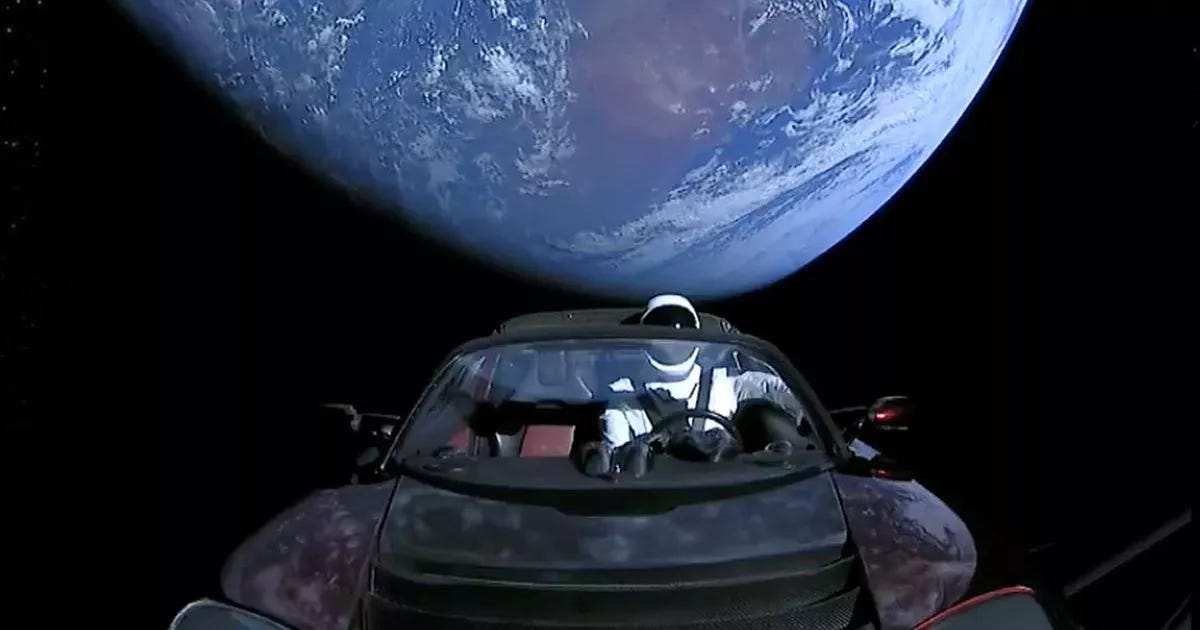
I cannot deny that some of our inventions are extraordinary - mind blowing examples of human imagination and ingenuity. But even the most advanced of them pale when compared to our planet and our home.
Earth is miraculous, not just for its vast oceans, lush rainforests, towering snow-capped mountains, abundant oxygen and its life-sustaining atmosphere, but for its role as a crucible of human evolution; its unique ability to preserve accessible records of countless earlier versions of itself within the rocks that compose its crust. This living geological record serves as an archive of our planet's past, reminding us that Homo sapiens are part of a continuum that transcends our fleeting tenure.
However, there's a problem. In our hasty, bustling lives, we tend to ignore this profound treasure of a geological legacy, throwing ourselves into the comforting embrace of a Newtonian worldview instead.
The Newtonian paradigm, which took root during the Scientific Revolution, emphasizes control and certainty, framing nature as a passive entity just waiting to be exploited. There's no doubt this perspective has facilitated astonishing technological advancements and fostered an understanding of certain physical aspects of the cosmos. However, it's also led to a dangerous hubris, persuading us into supposing that, having discovered the laws of nature, we are therefore in control of it. Our current environmental crises - marked by climate change, biodiversity loss, pollution and resource depletion - are, in part, consequences of applying a static, time-exempt mindset to dynamic, evolving ecosystems. In our relentless pursuit for short-term gains, we ignore the intricate interdependencies of natural systems, which are governed by rules far more complex than our reductionist models would have us believe.
In contrast, the Darwinian paradigm offers a more subtle appreciation of life on Earth. It recognizes the central role of time and evolution, highlighting the splendour and diversity that emerge organically from the ceaseless branching of life. In Darwin's own words, this perspective acknowledges 'endless forms most beautiful' that arise from the interplay of various species within their ecosystems. The Darwinian view encourages systems thinking, appreciating the individuality of species, their cultural lives, and their interconnectedness within a broader, more dynamic (and possibly unknowable) web of life. By embracing the dynamism of our natural world, we cultivate ecority, humility and adaptability - qualities I believe we will soon discover to be essential for navigating the challenges we face today.
If we examine the Darwinian perspective closely, we find it resonates deeply with indigenous wisdom. This often emphasizes a congruence with nature and an understanding of the long-term impacts of human activities on the environment. Indigenous cultures have long acknowledged their place within the Earth’s intricate ecologies, embodying a form of time literacy that remains critical in our contemporary context. The wisdom of this 'expanded now' teaches us the importance of sustainable practices and the need to honour the legacies of the past, as we shape our future, in a present pregnant with possibility. Indigenous perspectives remind us that we are not merely inhabitants of the Earth who happen to have honed a rare talent for crafting tools, but part of an integral ecological narrative that extends far beyond our individual experiences.
Despite these sobering lessons from both paradigms, the Newtonian attitude and its disdain for time still dominate the world of technology and industry today. A new generation of engineers and entrepreneurs would have us believe that humans can simply opt out of time, overlooking the intrinsic timescales of geological and biological phenomena. This delusion manifests in ambitious technocratic schemes such as geo-engineering the climate or terraforming Mars, where the complexity of Earth’s ecosystems is reduced to simple, linear solutions. These ideas reflect a temporal dysmorphia, an egotistical disconnect from a core understanding that the intricacies of life and the planet cannot be so easily stage-managed or dismissed.
As we confront the pressing issues of the Anthropocene era, it is becoming crucial that we learn to integrate both paradigms into our ventures and expectations. The Newtonian paradigm is a seductive liar. Even so, we must move beyond the illusion that we can simply engineer our way out of ecological crises. Instead, we should listen more intently to the stories embedded in the rocks beneath our feet, allowing them to guide us toward more sustainable and respectful interactions with the planet. By cultivating a deeper understanding of geological and biological processes, we can develop innovative solutions that honour Earth’s history and embrace the complexities of our existence.
I am convinced that the most viable path forward lies in reconciling Newtonian and Darwinian viewpoints, acknowledging their respective contributions while also recognizing their limitations. Rather than viewing nature as a mere backdrop to human enterprise, we must now see it as a dynamic and participatory force that continually shapes our existence. Cultivating a new relationship with time - one that embraces our temporal nature and the lessons of deep history - can help us reshape our expectations and practices as Earth citizens.
In this endeavour, we will find both solace and guidance in the records of deep time that are our common heritage. The rocky archives have patiently awaited our notice, offering reassurance in the endurance of earlier worlds that still surround us and are still present. Accepting that we too live in geological time can free us from narcissism and the illusion that only the material present is real and important. By letting the undulations of time wash over us, we might carry ourselves with less fear and greater confidence into a future where we remain authentic terrestrial beings rather than lonely nomads in some 'Star Trek' fantasy frantically trying to escape Earth by populating the nearest stars.
Ultimately, our journey toward sustainability and coexistence with the planet requires social change, and that does take time. We can start by celebrating ecosystems - peat bogs, rain forests, savannas, and kelp groves - their unique contributions to the planetary balance and the 'goldilocks conditions' that enable us to live on this Gaian rock. Developing new curricula that teach our children about Earth’s extraordinary ecosystems, from mid-ocean ridges to crumpled mountain belts, will instill a sense of respect and wonder for the world we inhabit. In striving to become a more time-literate species, we may learn to savour our brief moment on this wrinkled old planet, enfolded cozily within the creases of deep time.
By embracing this holistic understanding, we can begin to lay the groundwork for a post-Anthropocene world in which our species learns to be law-abiding Earthlings, finally appreciating the incredibly intricate designs that make up our shared home. And by marrying insights from both Newtonian and Darwinian paradigms, we can create a future that honours the past, respects the present, and prepares to adapt to the complexities ahead.
As we move forward, it's clear that relying solely on Newtonian physics as a default mode will not suffice; we must integrate the wisdom of the ages, the lessons of our ancestors, and the insights gleaned from our shared history into the very fabric of our evolution. In doing so, we can become custodians of a world that reflects our highest aspirations and deepest values - transforming what it means to be human.
We don't have to panic, or spend trillions trying to escape the world we've shaped to be the way it is. Together, we can compose a narrative that honours the past while embracing the limitless possibilities of the future - one that celebrates the beauty of life in all its forms and recognizes our role in the chronicles of time. This view of an 'expanded now' is not just an academic exercise but a vital leap of consciousness, shaping the trajectory of human development in harmony with the Earth, our home.